
A Love Letter to the Skagit
by Magnolia Mullen, Garden Manager
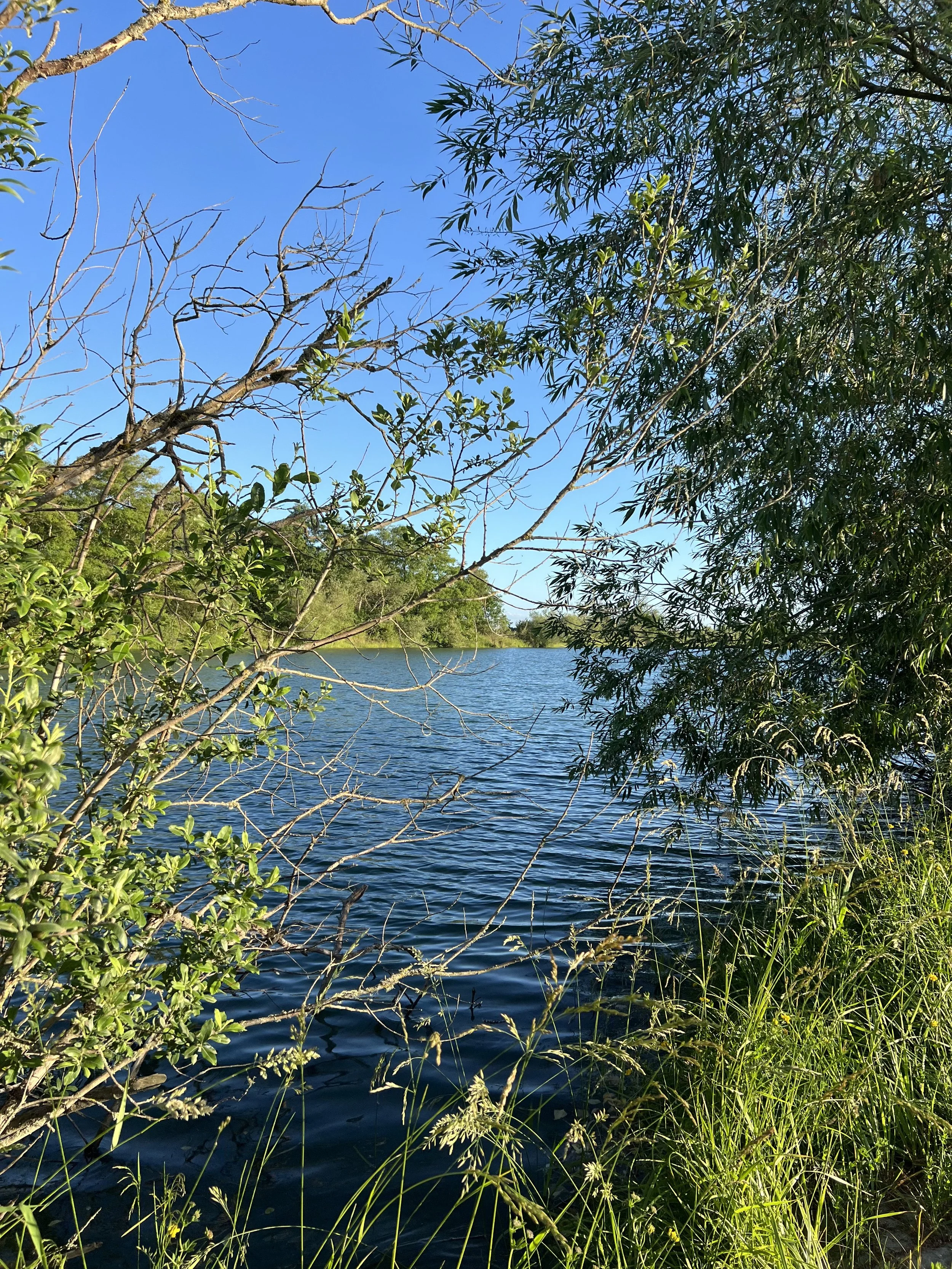
Looking past four kinds of finches adorning a yellow feeder on my deck, I marvel at the drastic scene change from six months ago. Blue sky rests atop a wall of green; grass reaching for the sun is patchily filling in the lawn of sand; the river is safely within her sloping banks. As Skagitonians, we talk about the magic of the Skagit. Catching up with a neighbor, we discussed our flood evacuation during the winter. For as stressful as that situation was, living on the wrong side of the dike during summer is indeed magical.
Experiencing the magic of the Skagit awakens my senses. Breezes smelling of saltwater from Skagit Bay move upstream and come through my open windows, making my cabin breathe and stay cool on warm summer days. Trees lining the bank are filled with birds who sing a chorus so diverse one cannot pick out individual species. Caddisfly larvae dressed in homes they made themselves with pieces of pyrite, pebbles, and plant debris leave tiny highways as they trek along the shallow sandy shores. The sun warms my body, feet in the frigid water. During this time of year, when the river reflects the color of lush foliage and cloudless sky, it is easy to forget that not so long-ago entire trees were churning past.
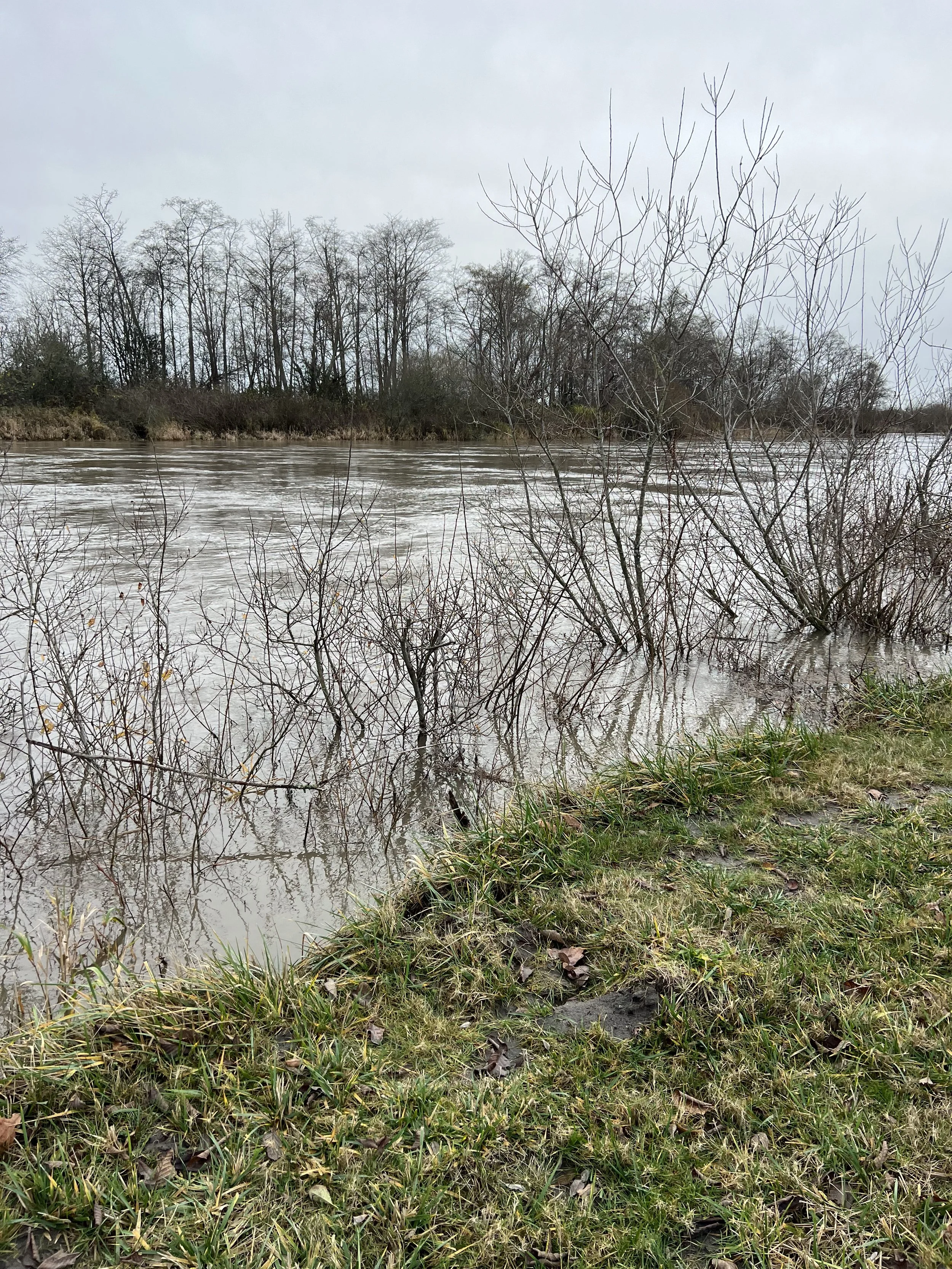
The river is just as magical with the color of winter. A color mirroring the grey clouds, leafless trees; the color of clay and earth lapping at the top of my steps. For this is what we have to thank for our fertile land. Skagit County has the highest concentration of small organic farms in Washington state, and our land is among the top of the most fertile soil on earth. This gives us an opportunity to eat locally year-round.
Reflecting on the landslide that closed northbound I-5 for weeks earlier this spring and recalling the record river levels this past winter, I realized if Skagit Valley were cut off from the rest of the fast-paced world, we would still eat well. Most food travels about 1,500 miles before you prepare it for dinner, climbing mountains, flying over oceans, releasing exhaust and contributing to dreaded traffic; fresh basil in December has a much larger cost than what you’re paying for for a few leaves in a plastic clamshell. Why not use the abundance that can be grown yourself with a pot of dirt and a sunny spot? Buy it by the pound when your local farmer has more than they can sell and fit into their own freezer. Freezing homemade pesto is an excellent way to make use of the abundance of Skagit Valley and to eat locally in the winter. Depending on where you live, buying farm-direct, from the farmers’ market or making your purchases at the Co-op cuts down your food miles by hundreds. Plus, the fact our local farmer is delivering fresh produce from their minivan or Subaru is endearing. Buying more locally grown food keeps Skagit farmland as such.
If you don’t have the luxury of spending a sunny Sunday afternoon touring the Valley and going directly to farms, farmers markets are an excellent place to support many farmers at one stop. Buying based on blue tags showcasing local farmers at our Co-op is another way. We have a wealth of food within our borders.
Do you really want to buy food that was harvested unripe and driven hundreds of miles? Wouldn’t you rather buy your food from a farmer who coos at her seedlings, buries an egg in the earth for good luck and asks how we can give back to the river that gives us so much?
One way to give back to the generous river and abundant land is to grow organically and support others who do so also. By reducing the chemicals we put onto the ground, we reduce the amount that finds its way to our waterways and our bodies. In our unfathomably connected web of life, our daily actions directly affect our own health. Aren’t we borrowing the land from future generations? Let’s leave clean water and healthy soil, trees and birds. Make choices that will be received as a gift, not a curse.
Golden hour shines at 9 P.M. on countless shades of green. A drastic scene change from six months ago. Count the tree swallows in their tree; five, ten, fifteen. Listen to the coyotes, look for the moon. Acknowledge the fragility of this ecosystem and vow to protect it for the beings currently here and the next tenants. Marvel at the deep, cold, absolute natural wonder that carved this valley I am thankful to call home.
Leftover Grilled Vegetable Salad
I like to make kebabs when I grill. That makes this salad even easier, since my vegetables are already in bite sized pieces. I highly recommend investing in metal skewers for grilling.
Directions
I dress my vegetables well for grilling, so no additional oil or salt is needed for me. If yours seems dry, add a little bit of olive oil.
I keep it simple and light with a big handful of freshly chopped herbs and a splash of balsamic vinegar.Use hardier herbs such as rosemary and thyme and swap out your salad green base for local radicchio or kale, add grated parmesan or local feta if desired.
Start with literally whatever grilled veggies you have on hand.
I often use: summer squash, mushrooms, onions, peppers, white salad turnips, scapes (...there are never any leftovers)
Optionally: add in a grilled protein of your choice.In a large bowl, put your base of salad greens. Again, whatever is in season or you have growing. Top with your mixed grilled veggies. Add a splash of balsamic vinegar and salt and pepper to taste.
Enjoy the bounty of the season, stove free!