
Compost the Bags, Not the Veggies
by Ben Goe, Produce Manager
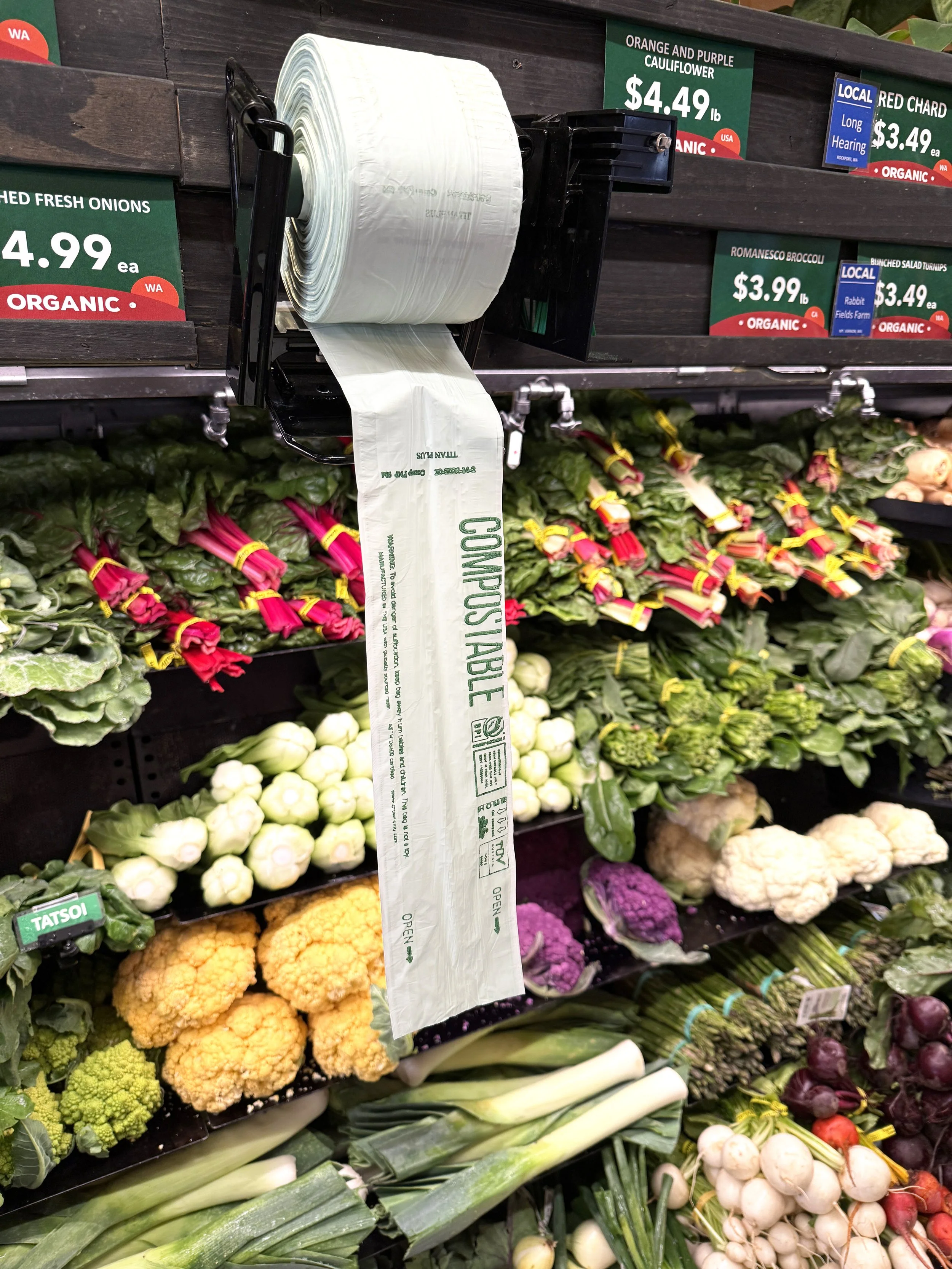
Food co-ops everywhere, including ours, have always tried to minimize their environmental impact—protecting the planet is baked into our founding principles. Bulk ingredients scooped into reusable containers, paper shopping bags (we’ve never offered plastic bags!), leftover produce cardboard boxes to pack your purchases in, and buying guidelines that prefer minimal, recycled, and recyclable packaging. Recently, at our Co-op, we’ve done away with plastic compostable cutlery, opting for returnable metal options, and we’ve been switching many single-use plastic items to compostable options. In the produce department, we’ve switched all of our plastic bags out for compostable plastic bags. Made from non-GMO corn and potato starch, Crown Poly is one of the only home-compostable bioplastics available and is OK Compost HOME Certified. They do take longer to compost at home than most things—up to 180 days—but they will fully break down in your home garden compost pile. Be patient! We really like them and have decided to commit to them.
Since making the switch, though, there’s been a common complaint: “My vegetables don’t keep for nearly as long in these bags!” It’s true, but we’re here to help. Compostable bags allow a lot more moisture loss and can also trap ethylene, the gas produced by produce as it ripens or ages. Both of these factors cause your produce to spoil faster, so be sure to remove your produce from these bags when you get home and utilize these more effective and environmentally sustainable tips to keep your produce fresh!
Use the crisper drawer of your fridge, and turn the humidity up for things that wilt like leafy greens and carrots. Don’t wash before you store, you don’t want excess humidity. If things are wet when you get them home, dry them before refrigerating. Storing in damp, reusable cloth bags works well, or you can keep a clean, slightly damp cloth over the top of the produce in your drawer. For things that rot but don’t wilt, turn the humidity in the drawer down. Melons, peppers, apples, and pears produce a lot of ethylene, so don’t store them in the same drawer as your carrots and greens. Avocados and tomatoes produce a lot of ethylene too, but you shouldn’t keep them in the fridge anyway. An open basket on the counter is best for them, or a rolled up paper bag if you’re trying to ripen. Same for bananas, mangos, papaya, and stone fruit like plums and peaches. Only refrigerate these things when they are fully ripe to slow them down, and not for long. Tomatoes should only go in the fridge if they are cut.
Use an ethylene trapping device. We sell a product called Bluapple in produce—it’s a small, plastic container that holds a replaceable packet which absorbs ethylene in your fridge, and it works shockingly well. You can also buy reusable bags that wick ethylene out. They work incredibly well also, but have a major drawback: any produce not stored in them will spoil faster because of the increased ambient level of ethylene in the fridge.
Store mushrooms in a paper bag in the fridge. Don’t store them next to the greens and carrots, and don’t store them with the ethylene-producing veg either unless you are using a Bluapple or similar product. You can also store them in a glass jar with a damp paper or cloth over the top. They should stay fresh for one to two weeks.
Store potatoes, sweet potatoes, hard squash, garlic, and onions in a cool, dry place. Putting them in a burlap or canvas bag discourages sprouting. Onions and garlic produce a significant amount of ethylene which will encourage potatoes to sprout, so it’s best to keep them separate. Don’t keep them in the fridge.
Transfer berries to a clean, dry mason jar lined with a cotton cloth or paper towel to absorb excess moisture, and cover loosely with a lid or another cloth. Don’t wash berries (or really any produce) until you’re ready to use it. For asparagus, green onions, parsley, cilantro, and other herbs, trim the ends, fill a glass vessel with about an inch of water, and stand them up. Put them in the fridge covered with a damp cloth. Basil is the exception; do the same thing but cover with an upside down (compostable) plastic bag instead of a damp cloth. Store it on the counter, out of direct sunlight.
Those are the major things to know, but by no means everything. If you ever want more information about storing methods or storing specific produce, please come talk to me or one of our other friendly and knowledgeable Produce staff members! We are always excited to share our expertise and to help you savor all of our wonderful produce for as long as possible.