
Grapefruit & the Gelatin Recipe You Didn’t Know You Needed
By Ben Goe, Produce Manager
Two wonders of winter, grapefruit and Brussels sprouts, have something in common: they are both misunderstood and unfairly maligned. People remember them as bitter and unpleasant, and that’s just not the case with modern varieties. I’m here to share a few ways to enjoy grapefruit, and I’d encourage you to read on even if you’re one of the people who think you don’t like them.
Brussels sprouts gained prominence in the 16th century in the Belgian capital of, yes, Brussels. Grapefruits originated by chance in Barbados in the 18th century, a cross between sweet orange and pummelo. There are dozens of varieties now, with Star Ruby being the most common. (An aside about pummelo—I strongly recommend the African Shaddock variety. It has a firm, meaty texture, with a note of pine. We can give advice on how to peel one if you need it.)
Grapefruit is the official state fruit of Texas, where the Rio Star variety was developed. Another commonality—Rio Star grapefruit and the Hulk are both the product of radiation! In 1984, Dr. Richard Hensz at Texas A&M began treating grapefruit bud sticks with thermal neutrons to induce mutation, and the Rio Star was born. One of the finest varieties, grown only in Texas, it is very sweet, has a deep red color, and is much less bitter than many other grapefruits.
The other variety I want to shout out is the Honeygold. It has a very short season, so get them while you can. Honeygolds have low acidity and are very sweet. The skin darkens to a golden color when fully ripe, and the flesh is a pale white-yellow. It’s easy to peel, nearly seedless, and segments easily, making it a great choice for adding to winter salads.
Rio Stars and Honeygolds will be stacked high in Produce with other in-season citrus, and as soon as we have fruit small enough to process in our juicer, we will be offering juice from both. In addition to a quick splash of vitamin C to start your day, I recommend using our fresh grapefruit juice for mixed drinks— good gin and good grapefruit juice are a match made in heaven!
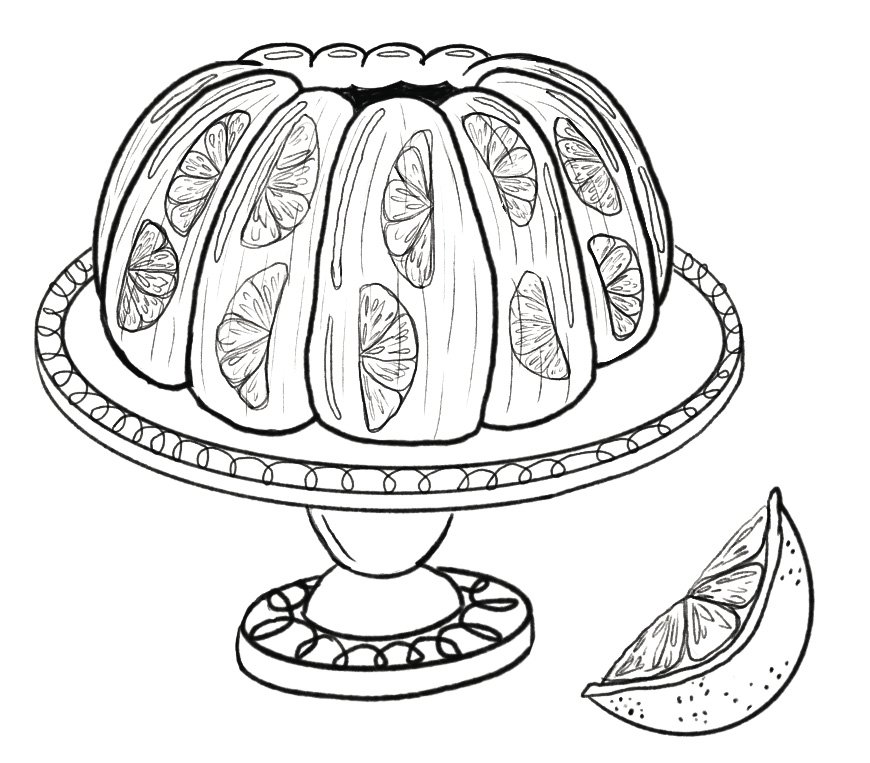
One other use I want to mention is gelatin. Hear me out: I think gelatin molds are due for a comeback, though maybe without as much tuna and mayonnaise as in the past.
To make an easy, fresh grapefruit gelatin mold, use unflavored gelatin, available in our bulk department. (You can also use agar for a vegetarian option, though the proportions and method are different.)
You’ll also need simple syrup: Bring 1 part water and 1 part sugar to a boil to fully dissolve the sugar, then chill. You’ll need equal parts simple syrup and grapefruit juice.
For every 2 cups of liquid, use one tablespoon of gelatin. Put the gelatin in a mixing bowl and bring a quarter of the liquid to a boil in a saucepan. Mix the hot liquid into the gelatin to dissolve, then mix in the cold liquid. Have a lightly oiled mold pan or bowl of the appropriate size ready, and pour the mixture in as soon as it’s fully combined. You can also add segments of the fruit after pouring it into the mold.
Chill for several hours, and invert onto a serving tray. Voila, it's the seventies! And Bon Appétit.

Photo Courtesy of Co+op
Citrus & Arugula Salad
If gelatin isn’t your thing, you can’t go wrong with a bright and flavorful winter salad. Featuring grapefruit, Cara Cara, and Blood oranges and accented with a simple balsamic vinaigrette and crunchy walnuts or salty feta, this salad will appeal to everyone at the table.
Dressing Ingredients
3 Tbsp extra virgin olive oil
2 Tbsp balsamic vinegar
1 clove garlic, pressed
1 pinch dried oregano
1/2 tsp salt
Salad Ingredients
1 large red grapefruit
1 large Cara Cara or navel orange
2 large blood oranges
1 small shallot, thinly sliced
4 oz arugula
1/2 cup chopped walnuts
4 oz crumbled feta, optional
Directions
First, make the dressing. In a jar or small bowl, combine the olive oil, balsamic vinegar, garlic, oregano and salt and shake or whisk to mix. Reserve.
Using a sharp knife, cut off both ends of the grapefruit and each orange to expose the flesh and make a flat surface. Place on the flat, cut side and use your knife to pare away the peel and pith, leaving just the flesh of the citrus exposed.
Place each trimmed fruit on its side and slice thinly. Remove any seeds and reserve.
Spread the arugula on a large platter or place in individual bowls.
Arrange the citrus rounds on top of the arugula, with the blood oranges on top.
Sprinkle with shallots and drizzle with dressing. Add walnuts or feta, if desired. Serve immediately.