Spring Greens Beat Winter Blues
By Ben Goe, Produce Manager
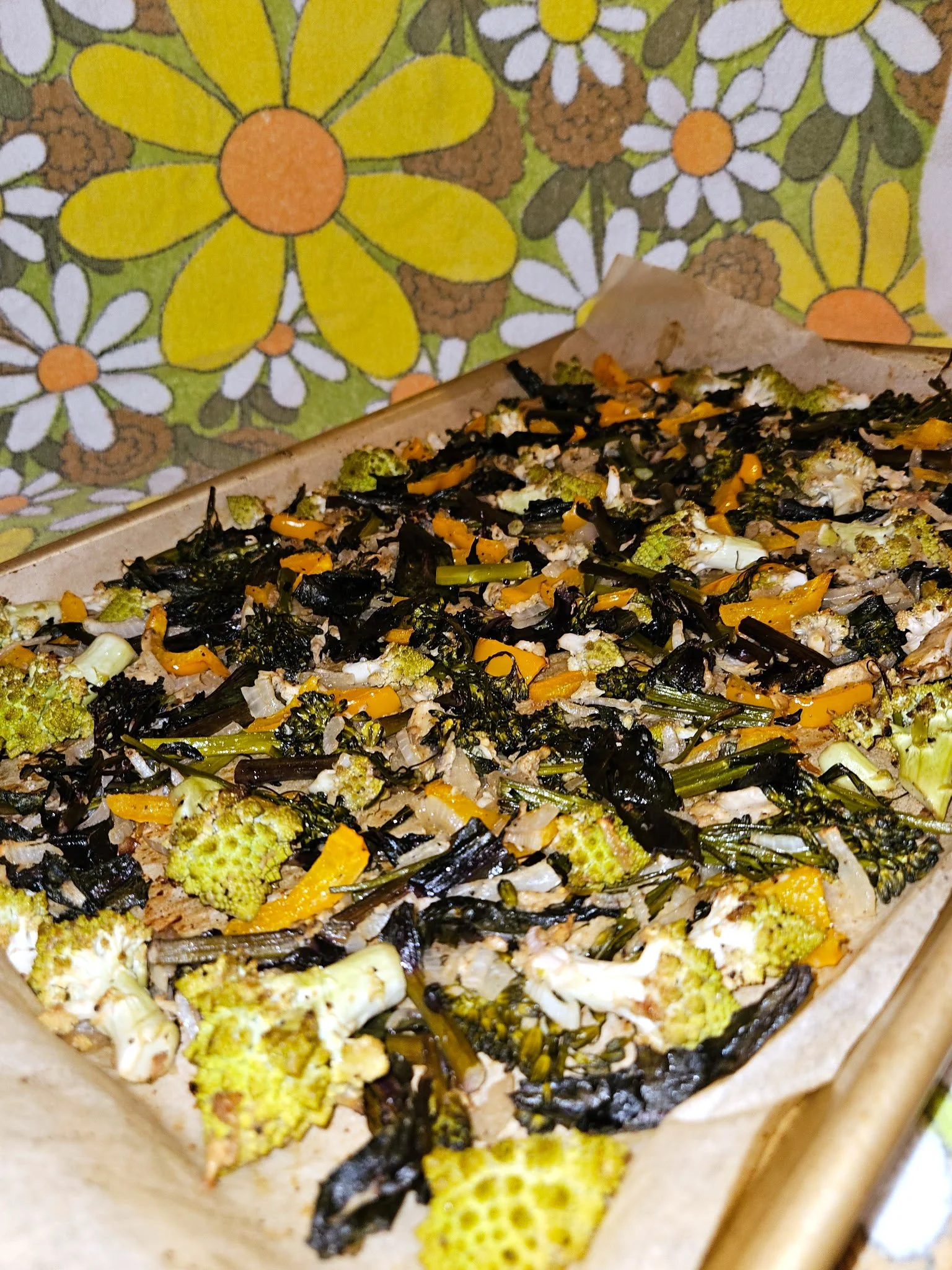
Ben’s blackened greens.
We all know leafy greens are good for us, but did you know they can boost energy, immunity, and allergy resistance? Mustard greens, collards, kale, broccoli, komatsuna, bok choy, pak choy, tatsoi, nettles, arugula, spinach, and asparagus are all great examples, and lucky for us, production on all of them starts in the spring here in Skagit Valley. Some of these aren’t vegetables everyone is familiar with, but lucky for you, that’s why I’m here.
There are a few common varieties of mustard greens, and they all come in both green and purple.
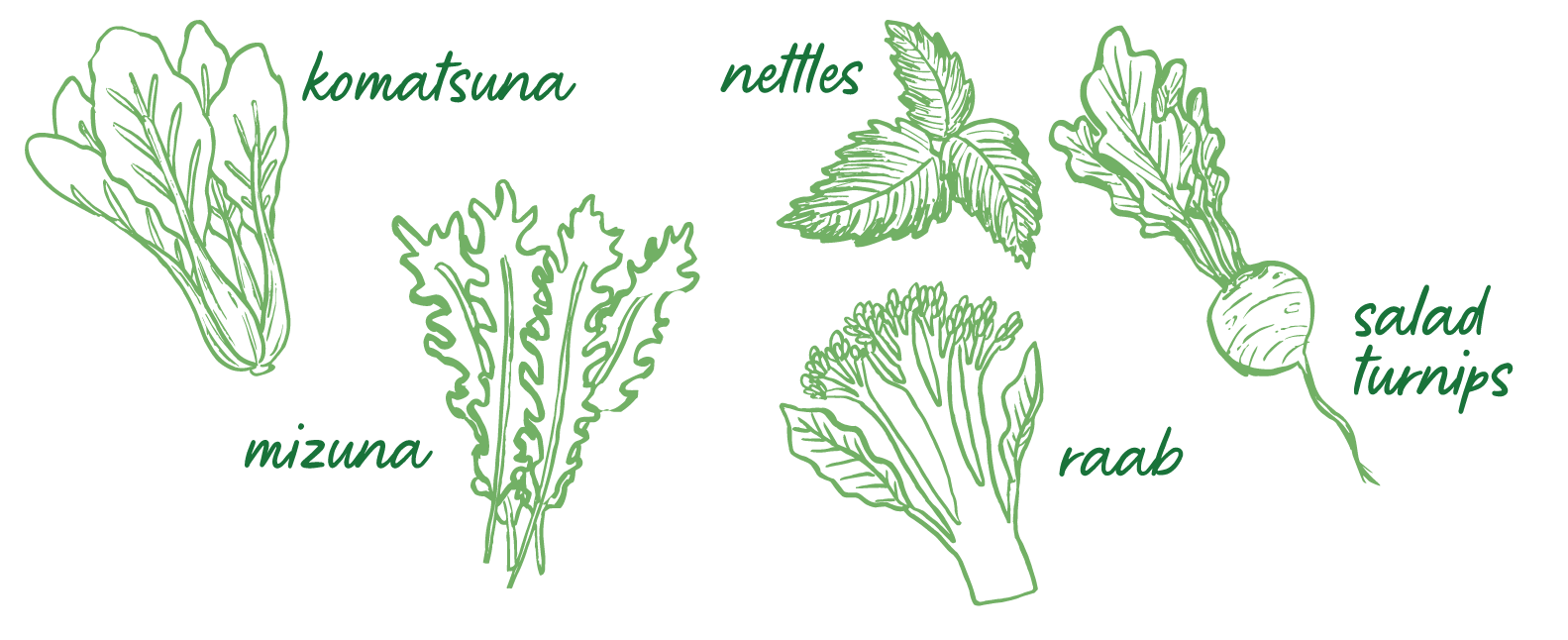
Komatsuna, also called mustard spinach or tendergreen, is a spinach/mustard-hybrid with thick, edible stalks and rounded leaves. It has a notably mild flavor and is commonly stir-fried or added to ramen. It’s also great for salads. If you’re cooking it, separate the leaves from the stems and add the chopped stems a minute before you add the leaves to give them a head start. This is the tried-and-true method for any of the delicious, tender-stemmed spring vegetables, like kale raab or rapini.
Mizuna mustard greens are also quite mild, but they are a true mustard. Thin spiky leaves and delicate, thin white stalks, try using them in place of arugula. If you are cooking them, they should be one of the last things you add to a dish. Other rounded-leaf varieties of mustard tend to have a spicier peppery flavor—still not too strong for salads, but often treated like kale or collard greens. Tatsoi is technically a mustard, but is more like bok choy crossed with spinach. It has a very mild mustard green flavor.
Nettles can be harvested in the spring—forager beware: use heavy gloves as latex gloves don’t offer enough protection, then snap off the budding tips when the leaves are just a couple of inches long. To remove the sting, you’ll need to blanch them—dunk in boiling water with tongs and cook for about 60 seconds, then use the tongs to transfer them to an ice bath, and drain thoroughly once cooled. Nettles can be used just as you would spinach, but because they are already cooked, they should be added last. They actually make for an excellent pesto, with or without basil or other herbs—just squeeze as much moisture out as you can after blanching and cooling before processing. Try using local hazelnuts for an earthy, and very Skagit version. You can also dry nettle tips for tea, to which I’ll recommend you to talk to Wellness Manager Nancylee.
If you didn’t already know, raab is the flowering stalk of any brassica: kale, collards, Brussels sprouts, cabbage, etc. The stalks are tender and sweet, as the cold of the winter has forced the plant to produce more sugars. They are great steamed or stir-fried, or any way you might treat baby broccoli or purple sprouting broccoli. One of my favorite tricks is to rough chop any of these raabs and toss with olive oil, aged balsamic, salt, and pepper, then roast on parchment paper at a ludicrously high temperature until the edges of the leaves blacken and get crispy.
Radishes and turnips offer up many of the same health benefits as all of these greens and come into season at the same time. Turnips, particularly, get a bad rap, and so, most people don’t include them in their diets. But several of our local farms grow little white salad turnips, sold in bunches. True to their name, they can be sliced into salads like radishes, where they serve a similar, if less-spicy function. My preference, again, is to roast them. Trim the ends and toss with your preferred oil and seasonings, and roast whole until soft. Sweet, creamy, mild, and decadent, they are great on their own or can be roasted with other veggies like asparagus, carrots, and broccoli. They are also fantastic in soups. Save the greens, use them just like mustard greens; they taste very similar.
All of these veggies are high in fiber, iron, vitamins, and antioxidants, and I guarantee adding them to your diet will help you spring out of your winter blues.