Where Who I Am Belongs
by Justin DeMeyere, Food Production Manager
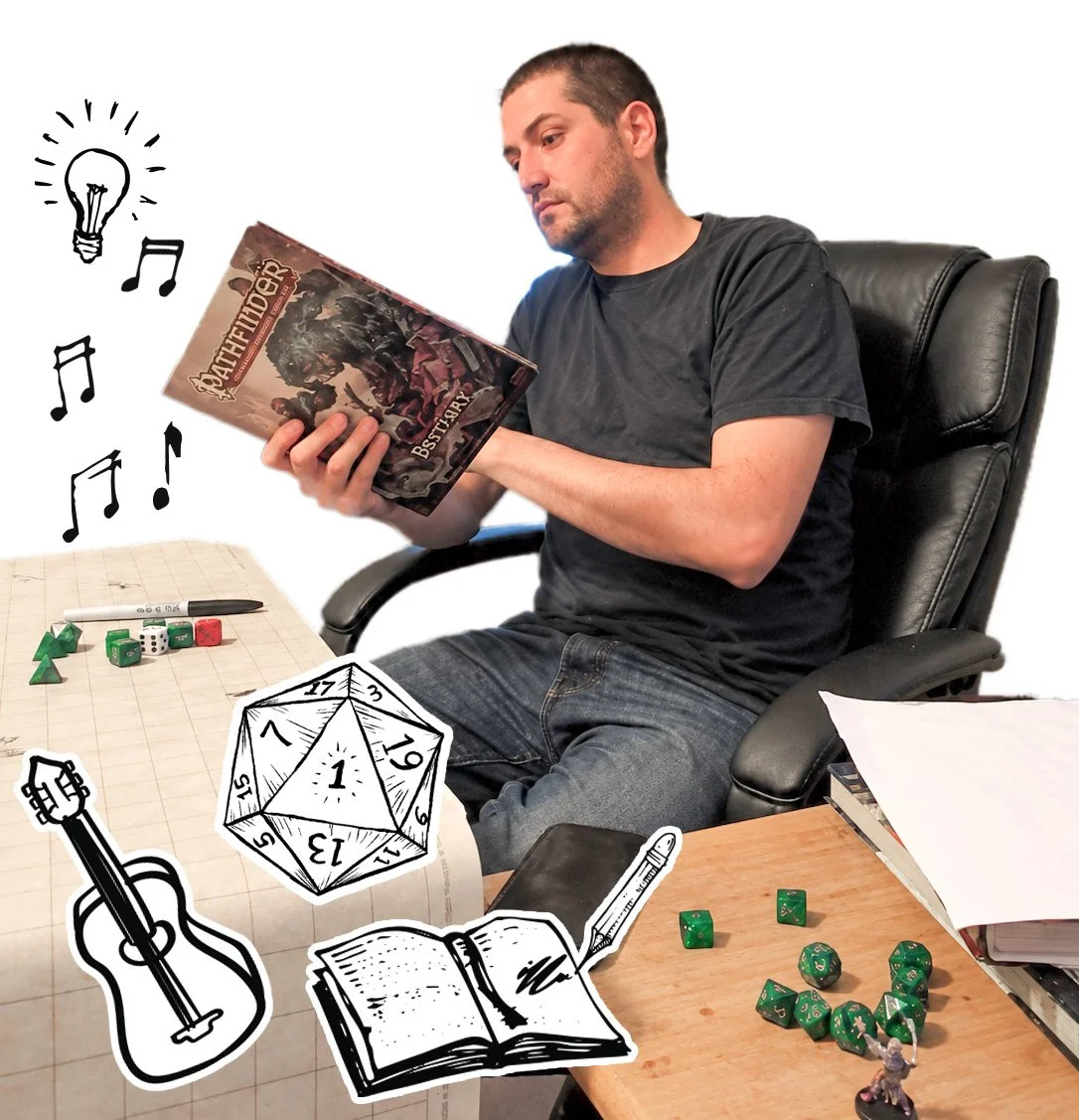
A younger Justin, finding his path.
On a cold autumn evening, I sat outside on a ratty old couch left behind by a previous tenant of the house my college roommates and I were renting. I was talking with my friend Miranda after a couple too many drinks. It was early in my college career, so I’m sure I was drinking something cheap and flavorless—a light beer, perhaps, or an off-brand hard lemonade. I was undoubtedly stumble-rambling through most of the conversation, and I don’t remember the quality, content, or veracity of much of what I said.
But I remember one part clearly. “All my life, no matter where I’ve been or what I’ve done, I’ve always searched for two things, and when I find one, the other eludes me. I’m looking for who I am and where I belong. When I know who I am, I don’t know where I belong, and when I know where I belong, I don’t know who I am.”
It sounds like utter intoxicated nonsense when written out, but for a long time, in my mind it remained true. I could never bring those two ephemeral pieces together.
Often, I knew who I was. I wanted to be an actor for the longest time, and then a writer, teacher, poet, musician, psychologist, cook, and leader. At other times, I knew where I belonged: among close family members, going out with incredible friends, engaged in a fulfilling learning environment, or drifting down a lazy river catching fish. But I could never make the two coincide. They were opposite sides of a coin, never able to face one another, with only one revealed at a time. When one part of my life felt fulfilled, the other remained hidden.
For years, I bounced from place to place and persona to persona, restless and questioning. Eventually, through some combination of disillusionment with big-city living, a desire to escape the “Seattle Freeze,” and a growing weariness with working graveyard shifts, I found myself starting over again—this time at Skagit Valley Food Co-op.
Starting over can be anxiety-inducing, especially when walking into a tight-knit community-focused workplace. As the “new guy,” I joined a crew with employees who had already been here for a decade or more, interacting more like close friends than coworkers, and I knew I wanted in on whatever that was. They shared inside jokes, jargon, insight, and a rapport I looked forward to sharing. No “Seattle Freeze” here, just longstanding Co-op camaraderie.
While I was settling in, something remarkable began to happen. The most important parts of who I was became more visible. My cooking skills expanded as I became an important member of our kitchen crew. My leadership abilities began to blossom until I felt sure and confident in ways I had never imagined. I learned to pass those skills along to others and to advocate for them in ways I had once wished my own mentors and leaders would advocate for me. I even got the chance to stretch my wings as a writer.
For the first time, the different parts of me weren’t competing for space. The cook, writer, teacher, and leader could all belong to the same life.
The Co-op also connected me to people far outside the walls of our own store. In October of last year, I shared a drink and threw axes with Chris Beeson, the Meat and Seafood Manager at Hendersonville Community Co-op in North Carolina. His store is smaller than ours, but our challenges were remarkably similar: rising labor costs, supplier problems, the lack of compostable packaging for all our daily needs, skyrocketing ingredient prices, and the challenge of keeping customers happy while continuing to offer competitive prices and great food. We parted ways agreeing to keep in touch and check in on one another from time to time. I had made a genuine connection with someone on the other side of the country—something my younger self would never have imagined or even attempted.
Then, at another conference this July, I spent time with Laura Pedersen of Ocean Beach People’s Food Co-op in San Diego and Jennifer Fassbender of People’s Food Co-op in Portland, Oregon. We were placed in a group during a seminar and asked to discuss issues facing our cooperatives. Interestingly enough, though our co-ops were different in many ways, we all chose similar problems. Hearing their perspectives and the different ways their stores approached familiar challenges helped me reframe my own. I walked away with a renewed respect for the cooperative model—and a reminder that none of us are solving these problems alone.
That is part of what makes a co-op human. It creates connections across a store, across a community, and even across the country. It is a network of people sharing what they know and helping one another carry problems that might otherwise feel solitary. Somewhere along the way, I also built the relationships with my coworkers that I had hoped for when I first arrived.
Years after that autumn conversation, I found myself sitting outside with Miranda again—this time on my own porch in spring. We were older, and both of us had found meaningful paths forward. She had become a psychologist in Portland, and I had found my calling here in Skagit Valley. The moment felt like a reflection of that long-ago evening, but this time, I had an answer. “This is the first time in my life my stomach hasn’t twisted into knots when I thought about going to work in the morning,” I told her. “I actually want to go to work. I’m excited for tomorrow. I think I’ve finally found what I’ve been looking for all these years.”
The change was incremental, not an overnight transformation. But for the first time, I understood that work could be rewarding—and that the values I held could be put to use in support of the people around me.
The Co-op gives me the chance to be a leader, but more importantly, it has helped me understand what I want leadership to mean. I get to build people up and have conversations about growth and development with future leaders—people who may one day guide the Co-op or become pillars of the community in entirely different ways.
They may go on to tutor young children, build independent businesses rooted in sustainability and environmental well-being, care for the elderly, or become child psychologists. Whatever paths they take, I feel proud knowing that I may have played some small part in their development. Here, we get to be part of something larger than ourselves: enriching the Skagit community and carrying what we learn into the world beyond it.

Kitchen Supervisor, Zach’s creation: the Roasted Veg & Mushroom Roll
I feel this most clearly when I sit down with members of my leadership team for one-on-one conversations about their futures. When Zach, our kitchen supervisor, and I pore over plans to improve our department’s processes, get excited about new recipes—like his Roasted Veg & Mushroom Roll—or talk honestly about how we can become better leaders and foster greater accountability, fairness, and presence within the Makery, I feel a sense of accomplishment that cannot be achieved alone.
That collaboration—the work of building each other up and becoming better together—is part of what makes us human. It is part of what makes us cooperative and sets this place apart from anywhere else I have worked. The truth is, this is a place where I get to live out my values—a home where every day feels as though some difference has been made, even a small one. Infinitesimal at times. Noticeable, perhaps, only to me. But a difference nonetheless.
Perhaps that was what I needed all along: not simply a place where I could discover who I was, but one where who I was could be useful to other people. The Co-op taught me that belonging is more than finding a community willing to accept you. It is opening yourself to that community, taking responsibility for your place within it, and helping create the kind of place where someone else might belong, too. I see that same spirit in the people throughout our cooperative community—the employees, farmers, suppliers, ranchers, teachers, and countless others who sustain our values and keep us moving forward every day.
Co-ops are human because they are made from all these acts of participation: people feeding one another, teaching one another, advocating for one another, and facing shared challenges together.
On that old couch, all those years ago, I thought knowing who I was and knowing where I belonged were opposite sides of a coin—two things I might never hold in view at the same time. It took another porch, another season, and many years between conversations with an old friend for me to recognize that identity and belonging were never separate discoveries. Each helped me build the other. Here, I have finally found a place where who I am and where I belong are part of the same story.