Stories of Cooperation: An On-the-Ground Study of Mondragón Spain
by Leigha Staffenhagen, Community Marketing Manager
“What part of Spain are you going to? Barcelona? Madrid?”
“I’m actually going to the Basque Country, a town called Mondragón”
“Oh… well, interesting, I’ve never heard of it. What’s there?”
“Oh, you know, just the centralized location of one of the greatest cooperative experiences and examples of worker resiliency and empowerment in the world.”
This was a conversation I had with a number of people before hopping on an eleven-hour flight to Spain in June. Even the most well-traveled people I know had never heard of such a town, but as someone who’s entering the third year of their Master’s program in Cooperative Management, Mondragón has become a bit of a mythical place.
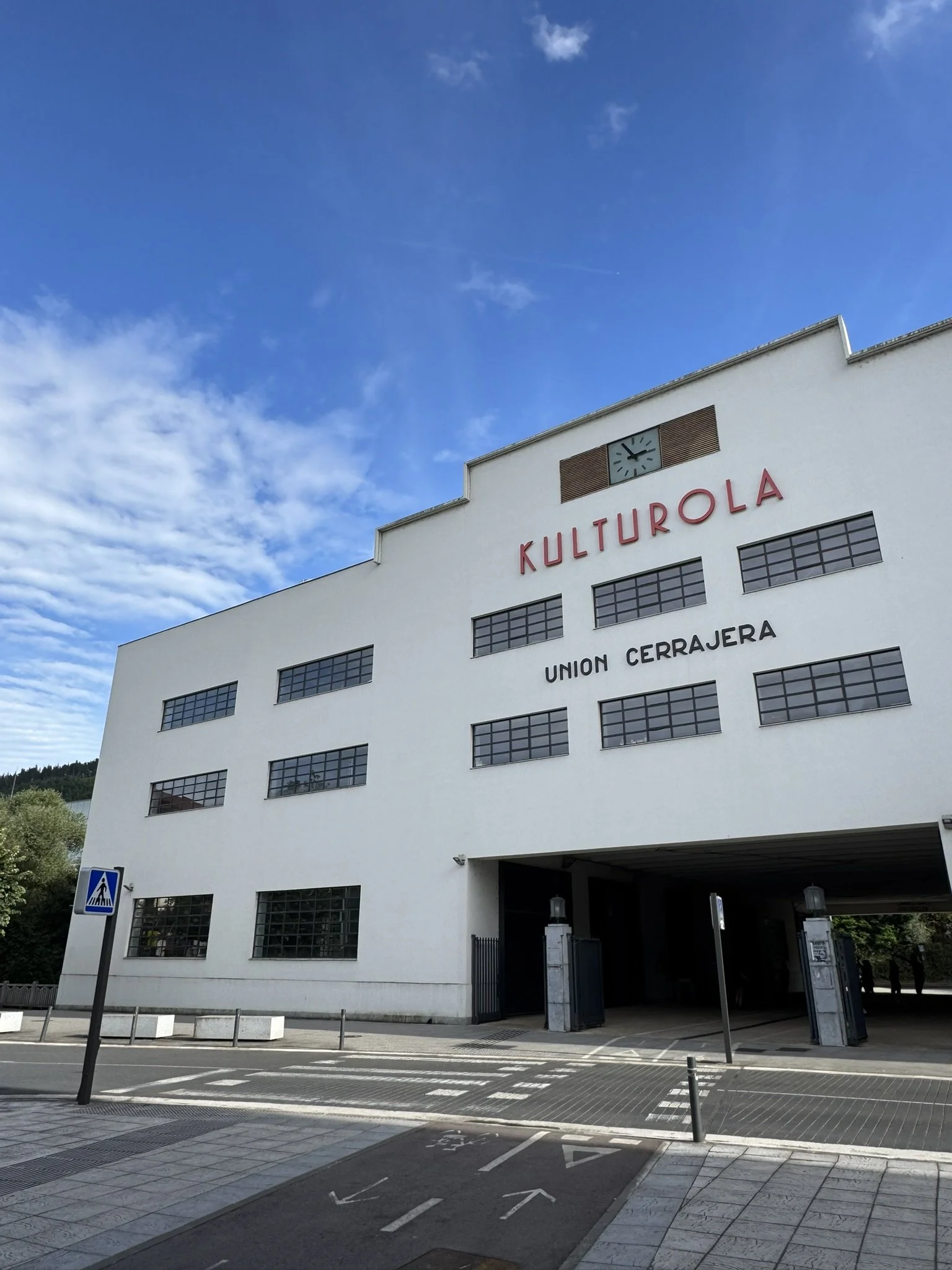
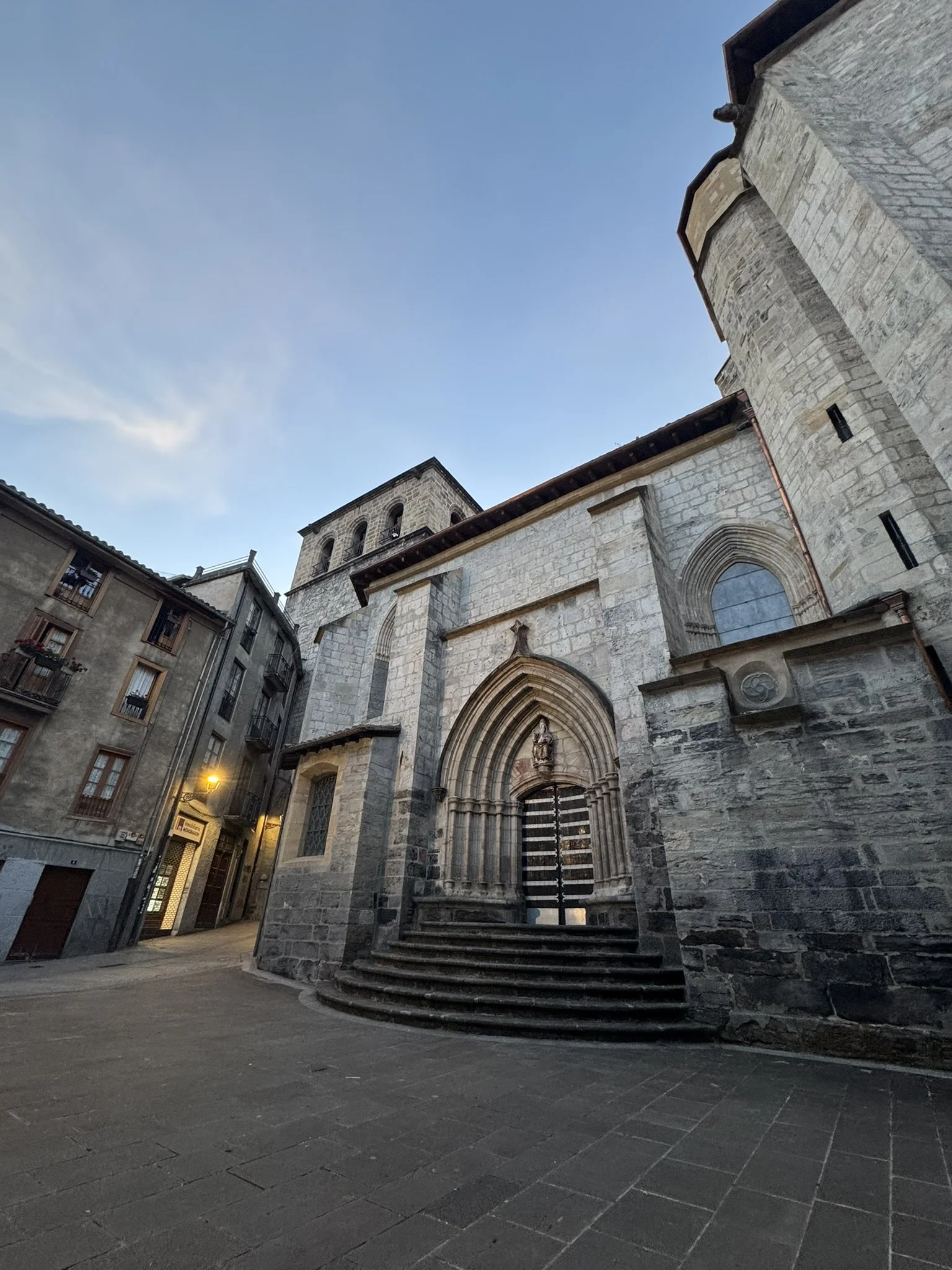
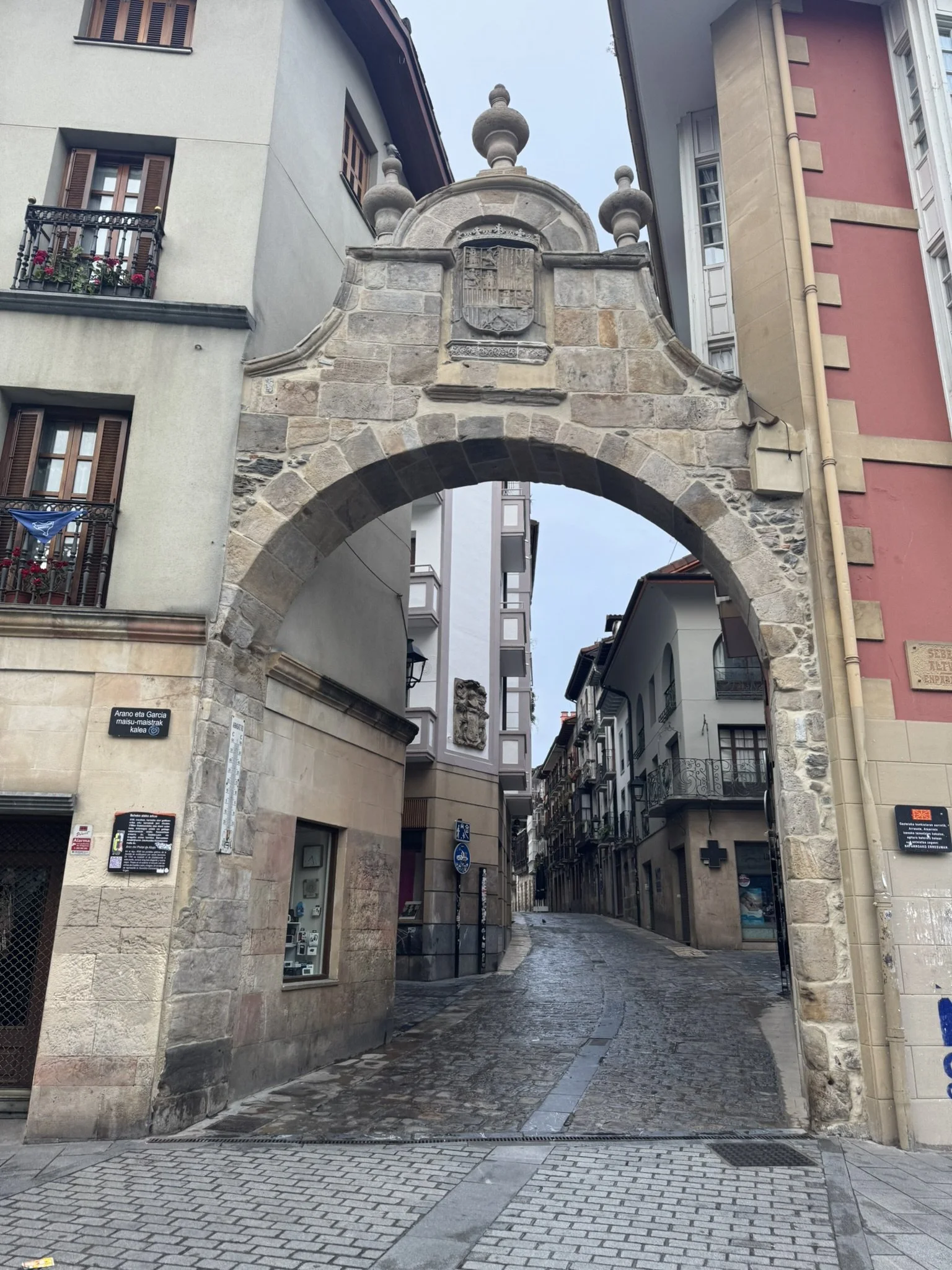
Situated within the rolling hills of Spain’s Basque Country, Mondragón has strong cultural roots, narrow cobblestone streets, and a bustling community of proud Basque people. But what’s hidden beneath the surface of this community is a highly successful economic model of worker cooperation that has attracted visitors from all walks of life to learn, admire, and, at times, attempt to discover its secrets.
Named after the town itself, The Mondragón Corporation is a worker-owned cooperative that is the largest business group in the Basque country and the tenth largest in Spain. As opposed to being one single cooperative, they are made up of numerous cooperatives that work autonomously, but are all coordinated under the Mondragón Corporation umbrella.
While the Mondragón Corporation operates all over the world, the headquarters—and the community they are most focused on—is the town of Mondragón, Spain. The four core pillars of their business are Finance, Industry, Retail, and Knowledge, which houses credit unions, a grocery store chain, manufacturing companies, universities, business R & D units, and primary schools, to name a few.
The Mondragón Corporation is shaped by the teachings of José María Arizmendiarrieta, a Catholic priest who arrived in Mondragón in 1941. Commonly known simply as Arizmendi, he encouraged a group of young people in the area to leave their exploitative jobs at the local factories to form their own company, based on his principles of worker democracy. ULGOR, the first worker co-op of the Mondragón Corporation was founded in 1956, the first step towards the Mondragón Corporation becoming the beacon of cooperativism that it is today. Currently, the Mondragón Corporation employes 70,000 workers, is made up of 92 autonomous co-ops and 104 subsidiaries and does eleven billion dollars in income across 150 countries yearly. Their only multistakeholder co-op (worker and consumer), Eroski, is a food cooperative that is the fifth largest retail grocery chain in Spain.
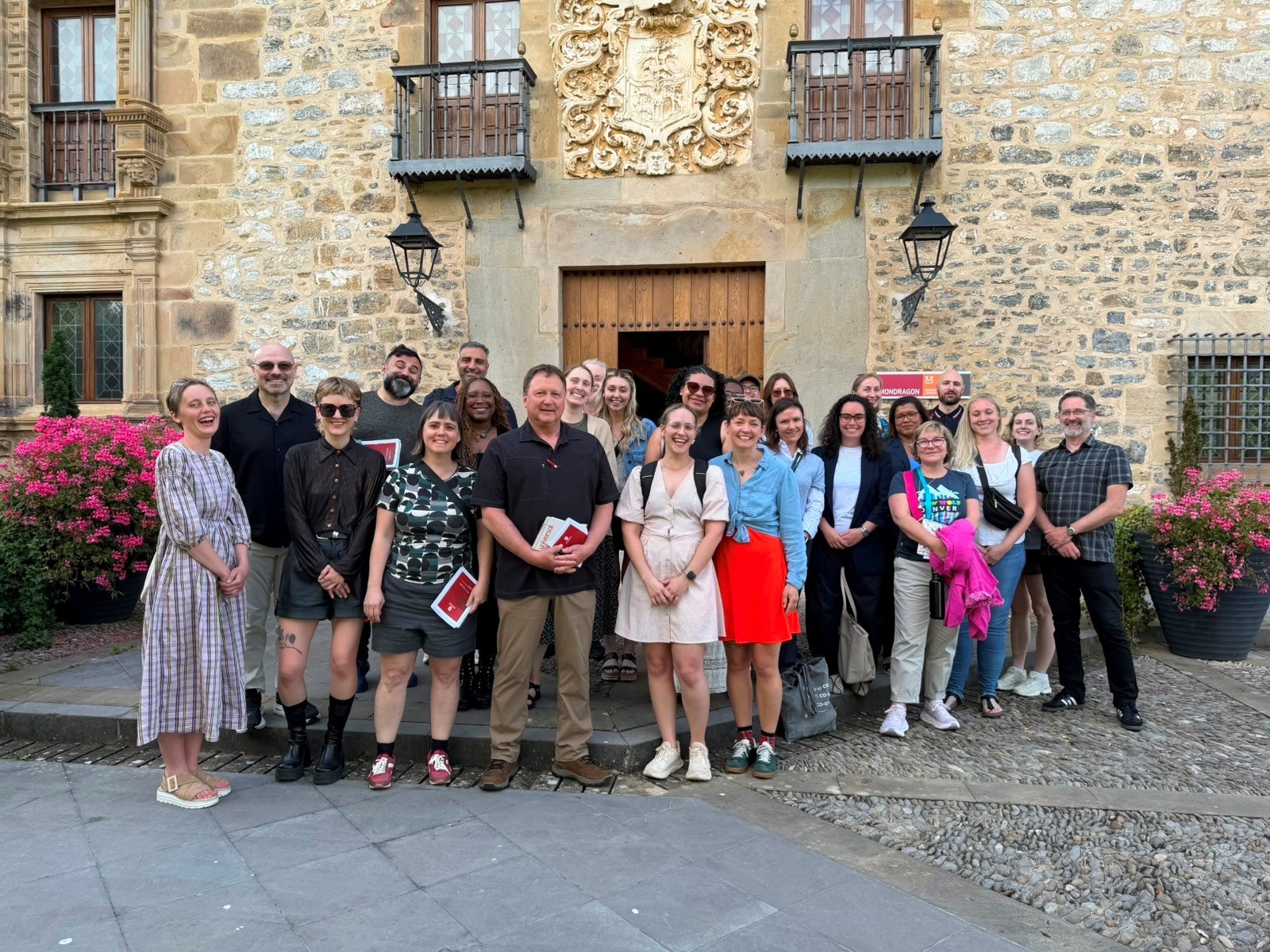
I was lucky enough to visit Mondragón—both the city and the corporation—through a study tour coordinated by Saint Mary’s University of Halifax’s International Centre for Cooperatives, where I am earning my Master’s degree. Our group consisted of SMU graduate students as well as other cooperators who have a keen interest in community organizing, seeing what worker cooperation can look like, and beyond that, how to implement it in their own work lives. Our co-op backgrounds and industries ranged from grocery and credit unions to financial services, housing, farming, and more.
Our group attended lectures at Mondragón’s educational center Otalora and the LANKI Institute for Cooperative R&D at Mondragón University. We also had the unique experience of touring a number of cooperatives both within and adjacent to the Mondragón Corporation: GSR Service Cooperative (elder care), Arizmendi Ikastola (education), RPK Industrial Cooperative (metal engineering and manufacturing), IDEKO (technological research), and Laboral Kutxa (banking). While I could write a multi-page essay about this for the Enquirer, as I did for my final course project, here are a few highlights:
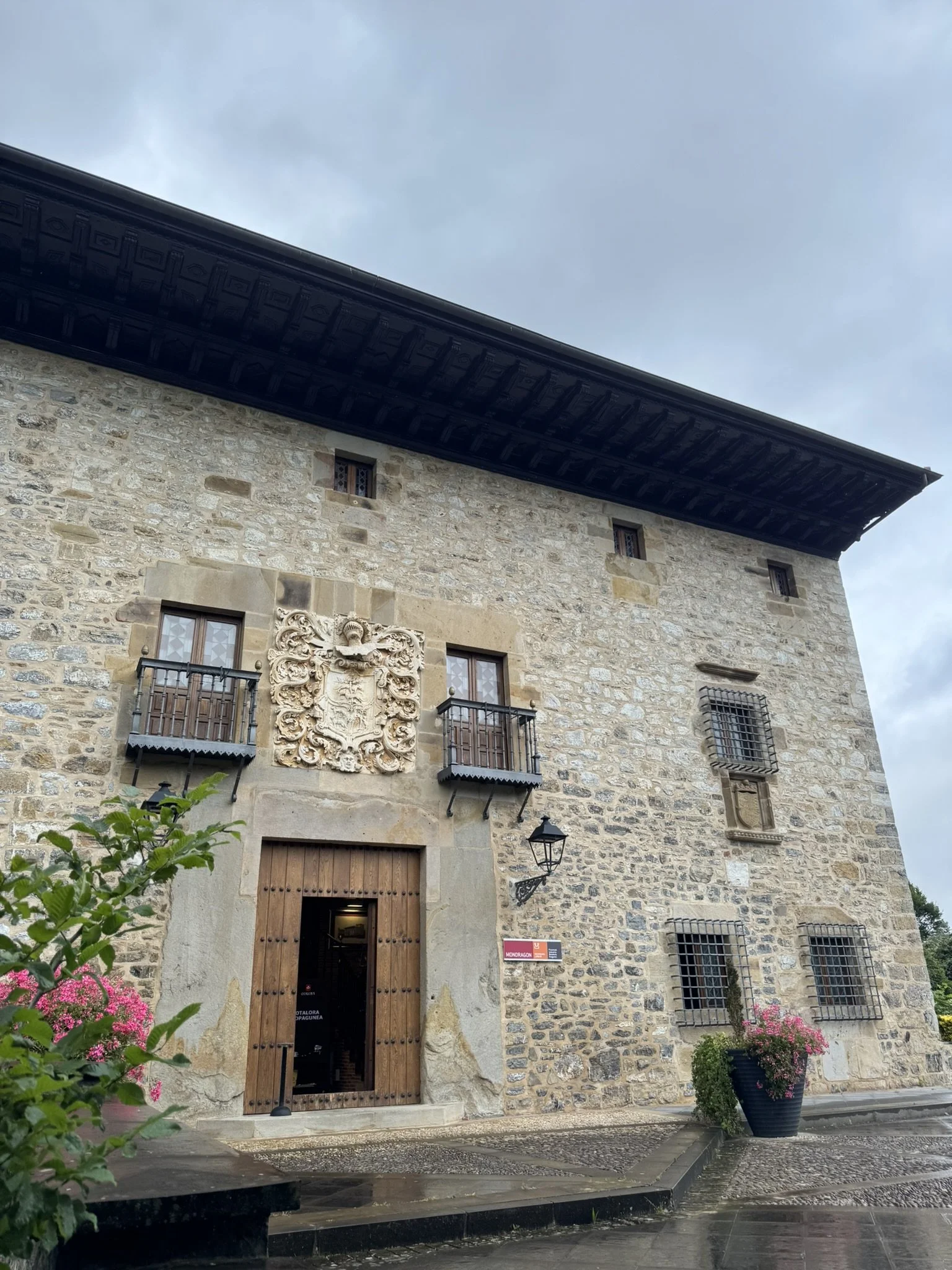
Otalora, Mondragon’s training facility.
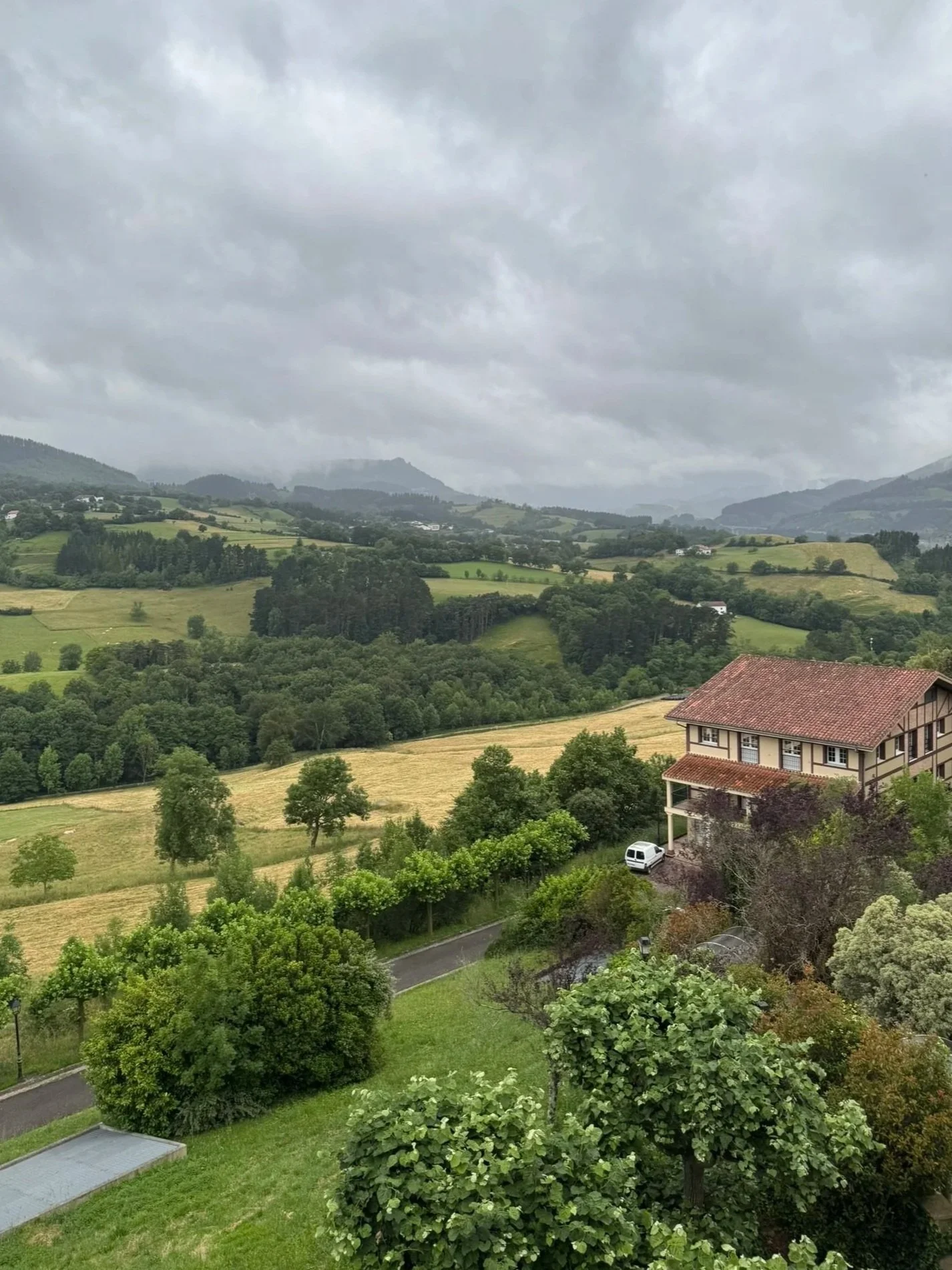
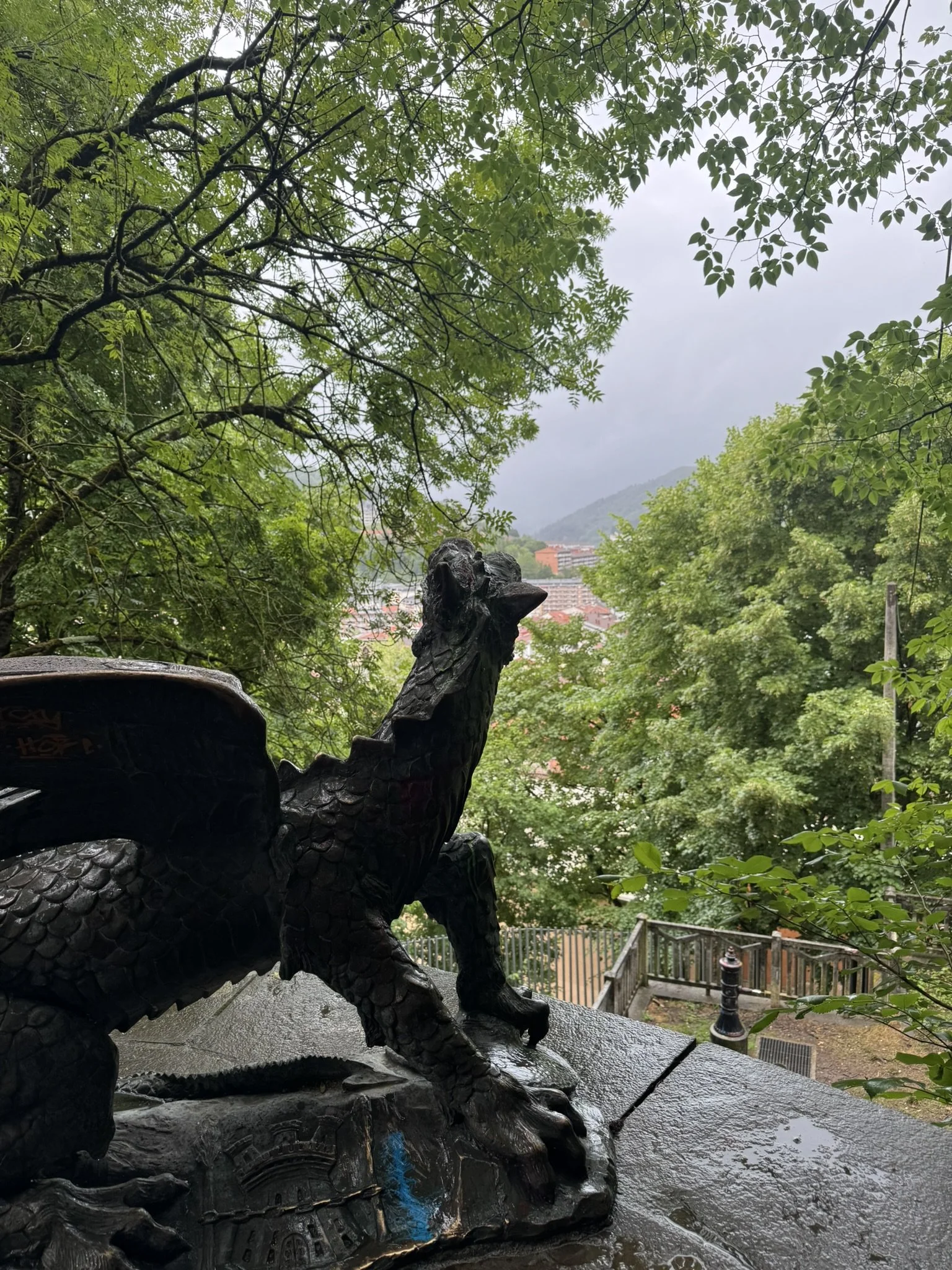
The view from Otalora.
Otalora | Mondragón’s Training Facility
On our first day of the study tour, we visited Otalora, Mondragón’s Center for Management and Cooperative Development. Otalora provides a highly-immersive education—one that is by no means accidental, as it is the first exposure Mondragón member-owners (their employees) get to the organization upon hiring.
Built in what was once a castle on the verge of dereliction, Otalora feels like stepping into another world, from the movie-style video-education screen positioned right by Arizmendi’s own desk and famous bicycle, to the sprawling grounds and traditional Basque Michelin-starred food served at lunch. Art featuring Arizmendi and Mondragón branding are interspersed with centuries-old stained glass and brickwork, honoring the past while acknowledging Mondragón’s modernity today. Along with being the training center for all of Mondragón’s hires, Otalora is a community hub where organizations from across the Basque region host their own trainings and meetings.
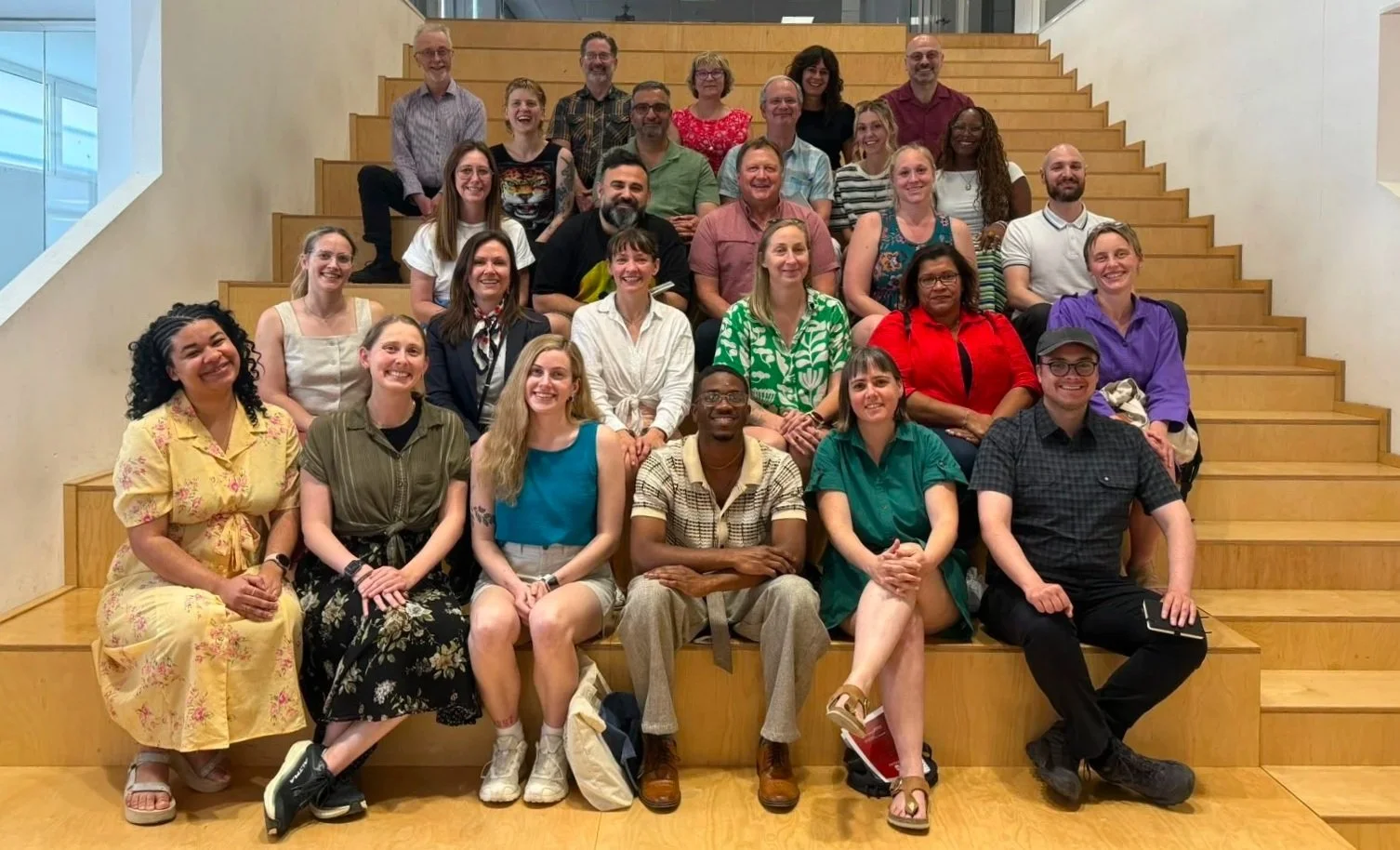
Our study tour group with the principal of the Ikastola.
Arizmendi Ikastola | Educational Cooperative
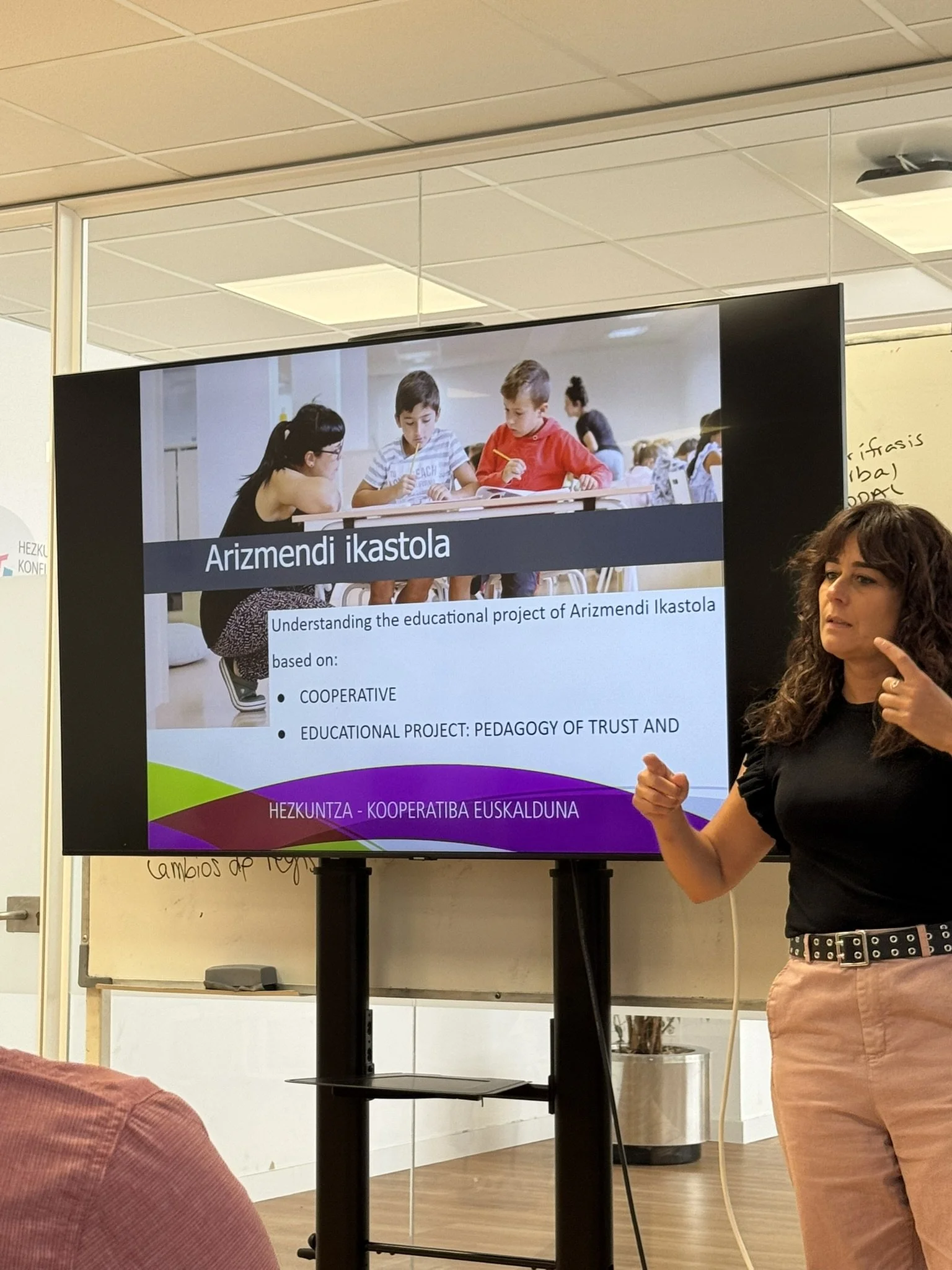
Located in the heart of Mondragón, just steps from the city center is one of the twelve locations of Arizmendi Ikastola, a cooperatively-owned school in the Mondragón Corporation with an alternative approach to educating youth. Their primary mission is to “contribute to the development of Basque-speaking, cooperative, entrepreneurial, and transformative individuals”.
Not only are they teaching students reading, writing, and math, they’re developing future citizens, with a significant focus on social-emotional regulation.
As opposed to a traditional public school where kids are organized into K-12 classrooms based purely on age, the Ikastola groups students by both biological age and developmental stages: 0-6, 6-10, 10-14, 14-18, and 18+. Instead of “subjects”, students are engaged in “learning experiences” that take place outside the classroom. And rather than spending six or more hours a day at the same desk in the same classroom, students move through various rooms and outdoor spaces with varying seating arrangements based on the learning experience. The Ikastola often puts the onus on the students, going so far as to say that “instead of the teacher being the protagonist, the students are the protagonists,” encouraging them to lead group work and overall flow of the class.
Just like our Co-op, the Ikastola holds an annual member meeting (general assembly) as well as monthly board meetings (governing council). In my notes, I’d written that tuition was €1,300 a month per student (over $1,500 USD based on today’s exchange rate), which to me seemed steep but not entirely outside the realm of possibility considering the cost of childcare and private school in the States. You can imagine my shock (and delight) when my fellow tour participants shared it was actually €100 ($116 USD). A cooperative school, democratically run by teachers, parents, and students, affordable for a variety of income levels? Unreal! Mythical, even!
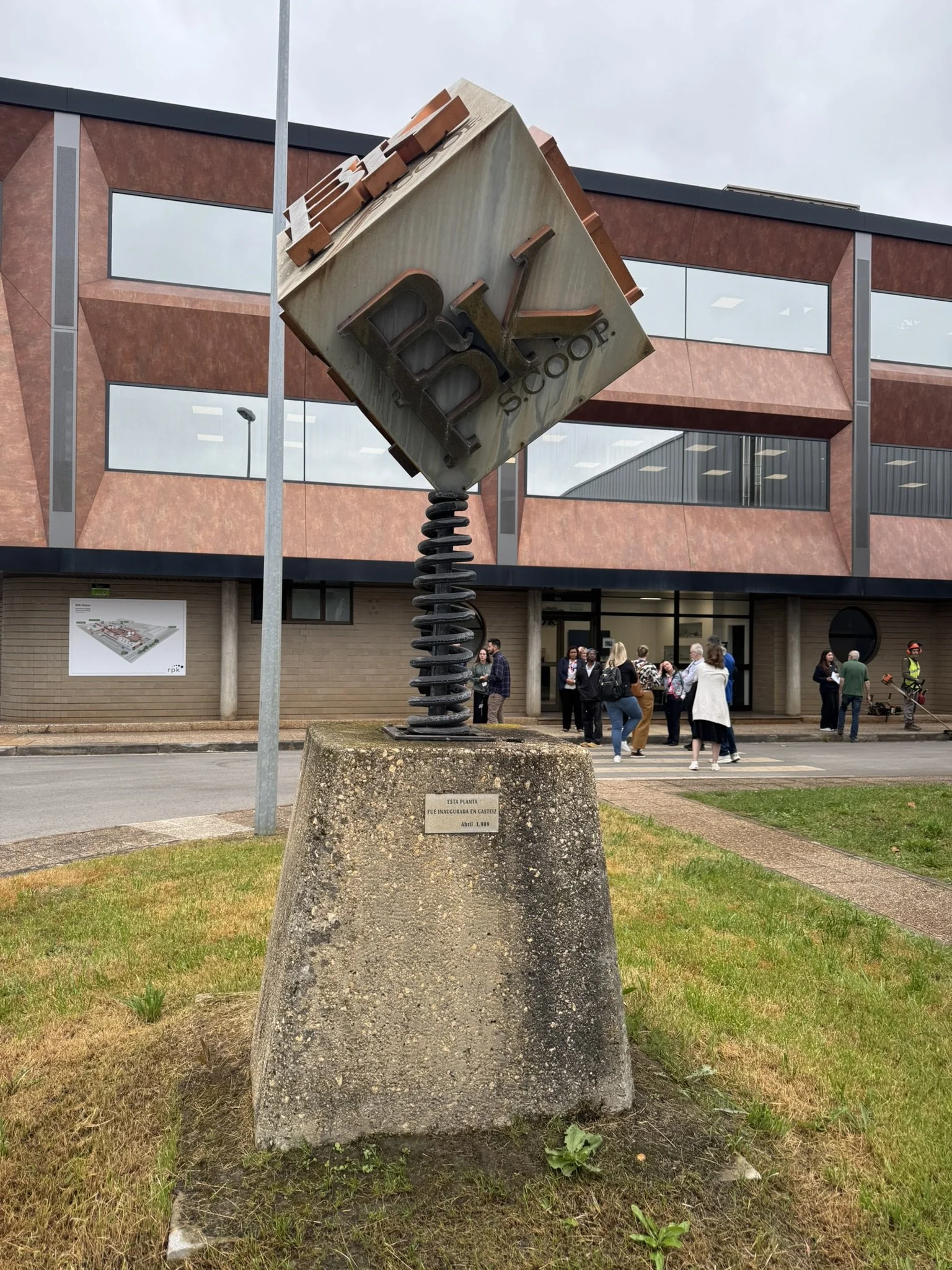
RPK Group | Industrial Cooperative
Considering 62 of the 92 Mondragón Corporation cooperatives are industrial, I’d be remiss to not include the RPK Industrial Cooperative. While not a cooperative within the Mondragón Corporation system, RPK is a highly successful worker cooperative that engineers and manufactures micro springs for various products and industries as far and wide as automotive, consumer goods, health care, electric, e-bikes, and power tools. I had no idea a trip to Spain would inspire me to reflect on the fact that tiny springs quite literally keep our modern lives in motion… But here we are!
RPK was founded in 1974 by nineteen entrepreneurs (a quarter of whom were women), as a worker co-op with the goal of reinvesting dividends into the organization’s development. The RPK reps on our tour shared that a major turning point in the company’s long-term success came during an economic downturn, when staff were willing to sacrifice their salaries in order to keep the business afloat, because they believed so strongly in the cooperative they were building.
We hear this a lot with co-op startups—including our own—founding members who volunteered their time to ensure the seed they planted and nourished would flourish into something the community needed.
Bonus: Social Club!
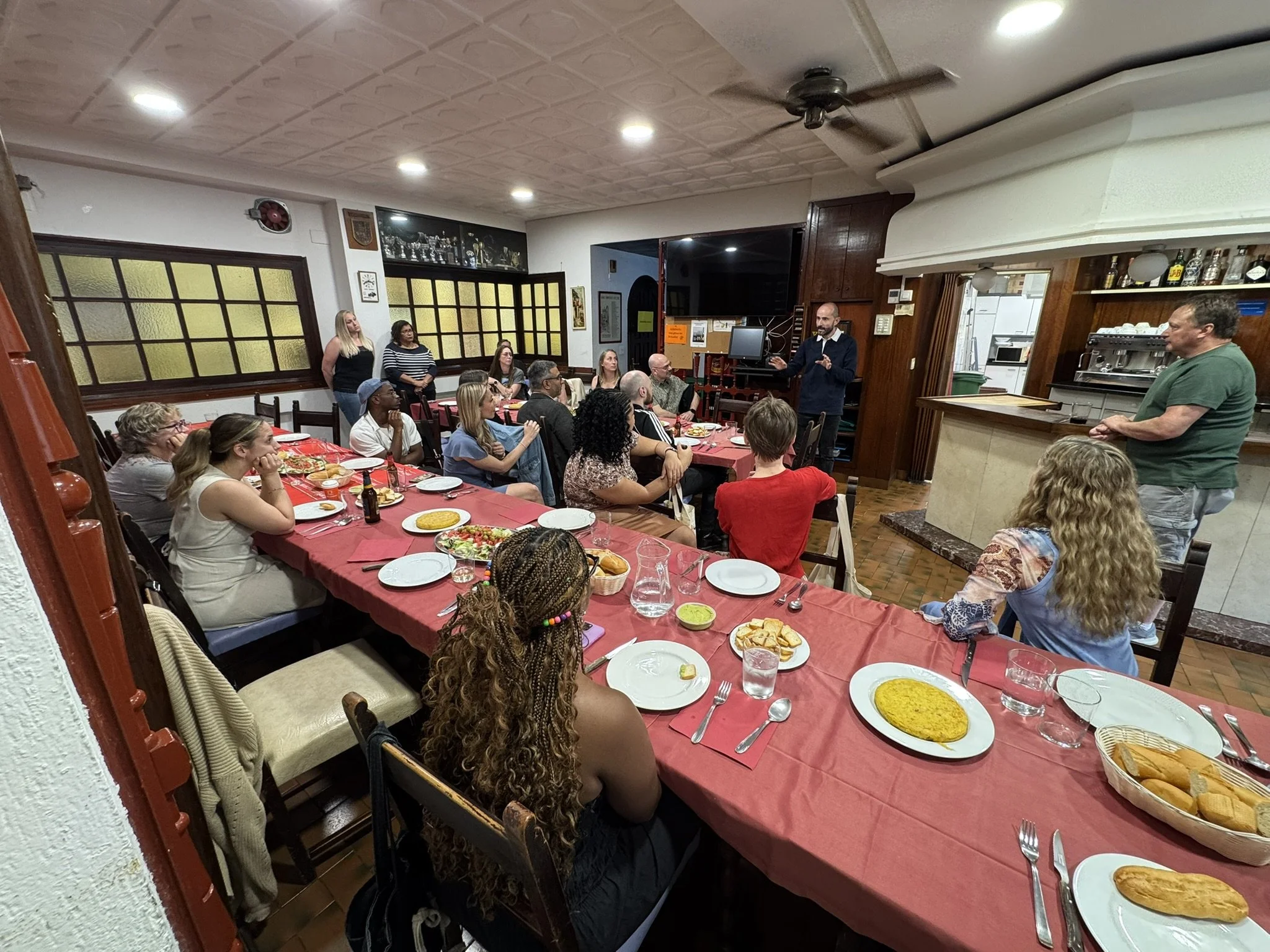
While not a formal part of the tour, our group had the unique experience of cooking, enjoying, and sharing a meal at our tour guide Anders’ social club. Because most housing in Mondragón are apartments, social clubs exist as a way for people to gather friends and family together to cook a meal, host a meeting, or kick back with some beer at the end of the day, in a space large enough to accommodate a group. Like co-ops, social clubs are democratically ran by its members. They follow a one member one vote structure and work collectively to make decisions about the scheduling of the club and bigger decisions like remodels, membership, maintenance work, and more.
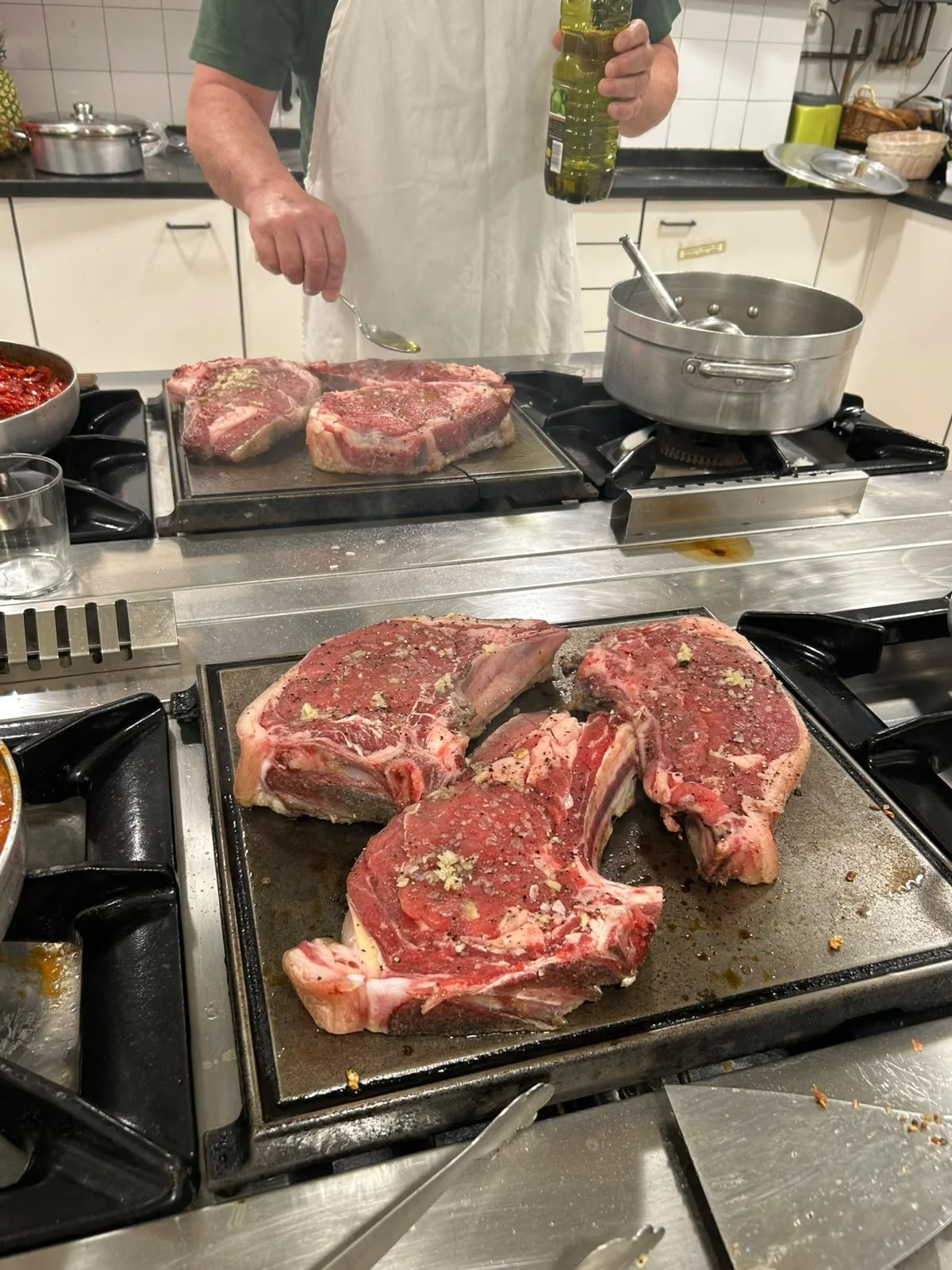
The social club’s kitchen has everything needed to prepare a meal, and the fridge is stocked with wine and beer. Members use the space, record what bevvies they drink, and leave it better than they found it. Fair to say this was a trip highlight for many of us—and I’d be remiss not to give a shoutout to my co-op friends Ole, Hollie, Ashley, and Erbin for preparing easily one of the best meals I have ever had. Still daydreaming about those sweet Spanish peppers and ribeye steak...
Learnings from the Basque Country
One thought from a lecture at Otalora that continues to resonate with me long after flying 5,000 miles back to Skagit Valley is the concept of legacy remembrance: reflecting on where we have been, what we have done and accomplished (as an organization), and how those accomplishments have impacted our history as a cooperative.
We can all agree on one thing: we are so lucky to have this Co-op in our neighborhood. As the member-owners of this beautiful, quirky, crunchy place, we have a duty to leave the Co-op as good, or better than we found it. We are so much more than a grocery store: we are a community hub. Without us, there is no Co-op. And, not to be dramatic, but without the Co-op, there is no us. In a world of corporate buyouts, billionaires, and industrial food systems that all come with the price of exploitative labor, environmental degradation, and disconnection from one another, the Co-op offers a glimmer of hope. A place we can all call our own where we bump into friends, connect with our local food system, and vote with our dollars.
What Mondragón reminds us is that we are so much stronger together, and we are obligated to nurture this place to ensure that it’s here for many generations to come. Shop local, uplift your neighbors, and continue to support this grocery store that we’ve come to call home, because without us, it will cease to exist.
It goes without saying that my experience in the Basque Country was one of insight, transformation, and affirmation—a reminder that cooperatives are a better form of business and can alter the working lives and experiences of those involved, whether as consumers, workers, or producers.