Northwest, Southwest
By nancylee bouscher, Wellness Manager
The sand is packed into road as solid as cement in between the two-story adobe houses of the Jemez Pueblo village, but as we walk up toward more modern houses, the sand shows hundreds of footprints from people walking with bellies and hearts full on the bounty of San Diego Feast Day. Junior is looking for footprints he left moments earlier when we walked toward the village. His six-year-old feet leave wide prints from dusty Crocs. I start to sing the rhythmic notes of the “Mission Impossible” theme song, and my husband, Junior’s great uncle, picks up the tune.
Junior has never seen the show, but he likes the added drama to his own personal mission, so he quickly joins in. He has a large stick that he grabbed from a pile next to his front door, and he’s using that to point out different tracks that might be his.
Look! There’s a Croc print, but it’s too large. I tease him that maybe it’s the track of his future self. He whips his face toward mine—his large glasses magnifying his doubt—and I’m struck with the similarities in his face to my own boys, now grown, who also had a pile of favorite sticks. Do all parents feel that pang when we see a shadow of our child’s past that we can never fully recapture?
Junior turns back to his mission, quickly finds his tracks and follows them back to his home. Inside, his Grandma has a table, at least twelve feet long, crowded with bowl after bowl of food ready to serve each guest as they come to feast. There is ground pork with green chile and stewed beef with red chile alongside a large basket of thick slices of pueblo oven bread. In the kitchen, there are staggering amounts of food on the stove to refill the bowls for hours to come. She encourages us to sit down and tells me, in English, to “Go ahead. Eat good.”, I do.
Yerba Mansa. Photo by Nancylee
As a kid, the meals I associate with my home were fried egg sandwiches on white bread with yellow mustard at my dad’s and chipped beef at my mom’s. I had two homes from the time I was two, and I still have two homes—one in Skagit Valley and one in Isleta Pueblo. Both areas are so rich with history and beauty, both homes to vastly different landscapes and flora. Here we eat salmon and berries, while Horsetail and Devil’s Club stretch in the canopy of Cedar. In the Southwest, there’s Yerba Mansa in the shade of Cottonwood, a powerhouse plant used as medicine for centuries.
Translated to “Calming Herb”, Yerba Mansa is traditionally used for respiratory, immunity, and calming inflammation. She is a low-growing perennial that loves marshy soil and blooms delicate white flowers in the spring. When a wild plant becomes sought after as an ingredient needed to create a product, there can be negative consequences if the wild harvesting of large amounts for big companies is not done ethically.
Due to habitat loss, Yerba Mansa is now on the watch list of the United Plant Savers, so responsible companies are making efforts now to protect her. Of course, beyond what Yerba Mansa does for us as plant medicine, she plays an essential role in the ecosystem by aiding in soil regeneration in compacted areas.
Just as there are guidelines around what it means for a cultivated crop to be grown regeneratively or to ensure that people are paid fairly for their labor, there is also an organization with established guidelines for ethical wild harvesting, FairWild Foundation. They operate globally to help protect the ecosystem and the harvesters alike from Kenya to Kazakhstan, and now in New Mexico, to ensure the responsible stewardship of Yerba Mansa.
Many of our Wellness brands use FairWild-certified material in their products: Gaia Herbs, Herb Pharm, Mountain Rose Herbs, Traditional Medicinals, and WishGarden Herbs. Yerba Mansa root is used in many of Wish Garden’s herbal extracts, including Kick-Ass Allergy and Get Over It, two of our bestselling remedies by WishGarden.
WishGarden’s products offer ease of use with their pumps and formulas that include glycerin and alcohol as extractives. This means the flavor of the herbs are often a bit muted by the natural sweetness of the glycerin, making their children’s products very popular. Colds, colic, and calmness are just a few issues they address for your medicine mama cabinet. We are also stocking some of their delightful diapering products. WishGarden has long provided staples for mamas-to-be with their pregnancy and nursing-specific products, like After Ease and Milk Rich.
If you have really good eyesight or a magnifying glass, you will notice that each herb listed in their ingredients tells you if it’s grown organically or wild harvested.
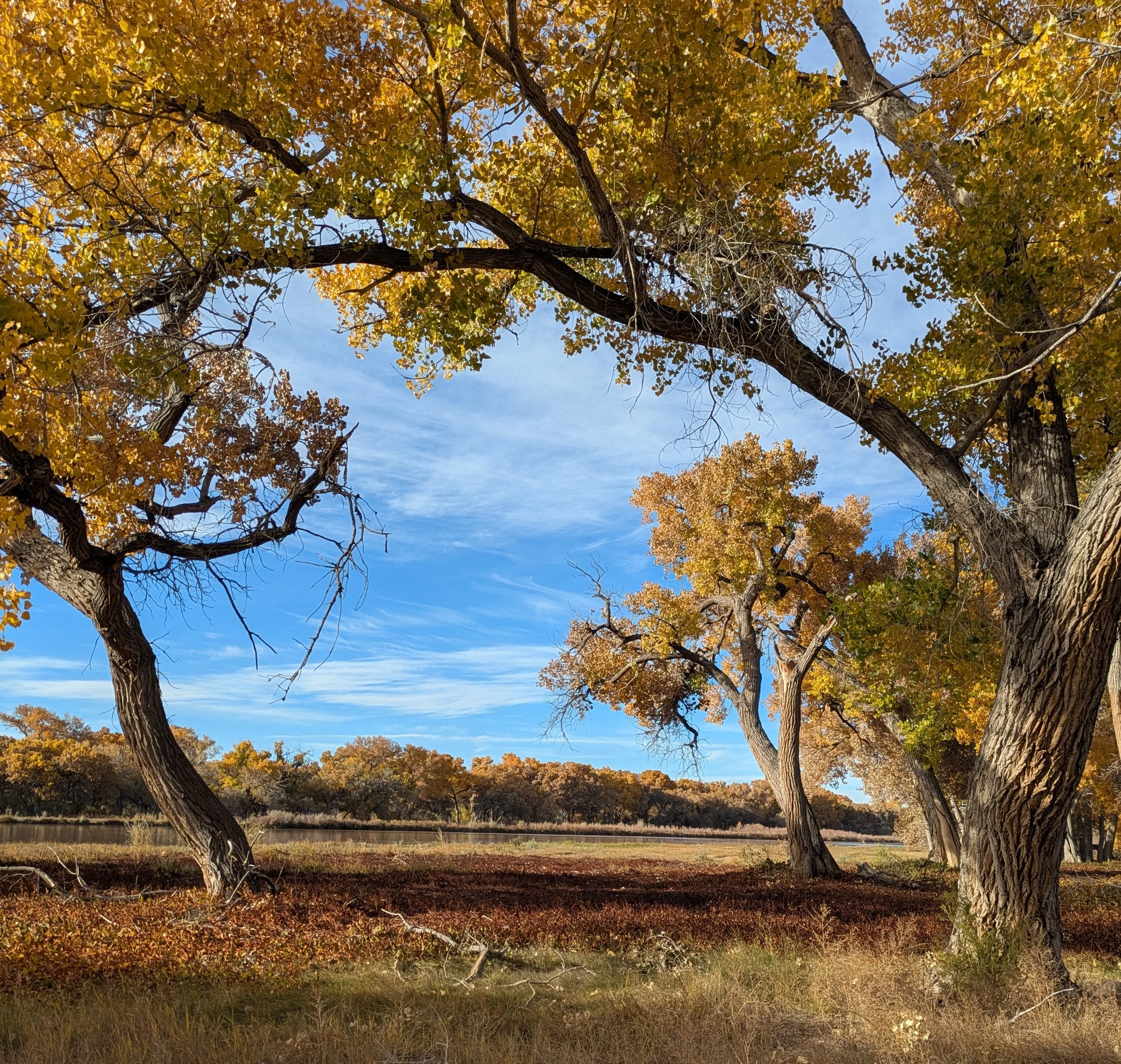
In November, the Yerba Mansa under the Cottonwoods along the Bosque are dried to reddish brown. Underfoot, they are as crisp as the winter air, and when I reach down to touch the dried cone left on a brittle stalk, it breaks off. The scent of it is earthy and sweet with a subtle smokiness, almost like cinnamon. I realize I have never seen this patch in bloom, and I make plans in my head to visit this spot the next time I’m in the south valley of Albuquerque in spring. While tempting, I know I won’t harvest any of her, though. For one, I honestly don’t know when or how to harvest her ethically. It’s irresponsible to just start yanking up wild plants, folks. Also, I already have plenty of Yerba Mansa in my cupboard to see me through several seasons of coughs, and if I did need to purchase some, I know where to find some real good stuff. But I will feel that temptation—I always do. There’s this part of me, some primal yearning to reenact a way of life my ancestors may have experienced in a hope that it will connect me with them.
This same feeling hit my core with fierceness as I watched the hundreds of dancers at Jemez Pueblo on their feast day. Junior’s older sister led us to a spot to put our folding chairs to watch, but I decided to stand. For many, the images that come to mind when we think of Native dancers might be ones from Powwows.
Possibly you have been to a Powwow or watched videos of them. Feast day dances are very different. The lines of dancers are diverse in their ages and some mild variances in their regalia, but there is cohesiveness as each dancer wears either bells or strings of shells. As they dance in unison their rhythm adds to the drum beats and voices surrounding us. The cacophony of sound is all-encompassing, and I close my eyes to keep my tears in. It feels like the earth is pulsing with this heartbeat created by their unified footsteps, and again this primal yearning surges somewhere inside of me.
I have tried to explain this feeling to others, and I have chased ways to feed my need for community and connection. Sometimes, it’s just me shaking my head at a hunger that I cannot satiate or explain. But now and then, I get a fleeting feeling of what somewhere way back in my DNA it was like to have a song, know a dance, have a meal, and be surrounded by people who know the words, feel that pulse, and know the true blessing of what it means to “eat good.”